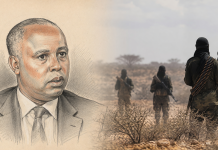





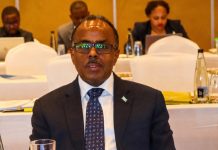


A Shabab-scared Ambassador Tesfaye Yitayeh Anteneh warned that Ethiopian recognition of Somaliland could open the door to Al-Shabaab, complicating a relationship both sides have spent decades treating as strategic, as President Abdirahman Mohamed Abdullahi Irro prepares to travel to Addis Ababa.
Ethiopian Ambassador to Israel Tesfaye Yetayeh Anteneh warned that Ethiopian recognition of Somaliland could open the door to Al-Shabaab, complicating a relationship both sides have long treated as strategic, as President Abdirahman Mohamed Abdullahi Irro of the Republic of Somaliland prepares to travel to Addis Ababa.
Ethiopia’s long search for reliable access to the sea has put it at the center of one of the Horn of Africa’s most sensitive disputes: whether, and when, to recognize Somaliland. In an interview with Laura Cellier on i24NEWS’s Middle East Now, Ambassador Tesfaye Yitayeh Anteneh, Ethiopia Ambassador to Israel, laid out the argument that has so far kept formal recognition off the table. Recognition, he said, would not be a purely diplomatic act. It could unravel the security arrangement that keeps Ethiopian troops inside Somalia, and hand Al-Shabaab an opening that would reach Somalia, Somaliland, and Ethiopia itself.
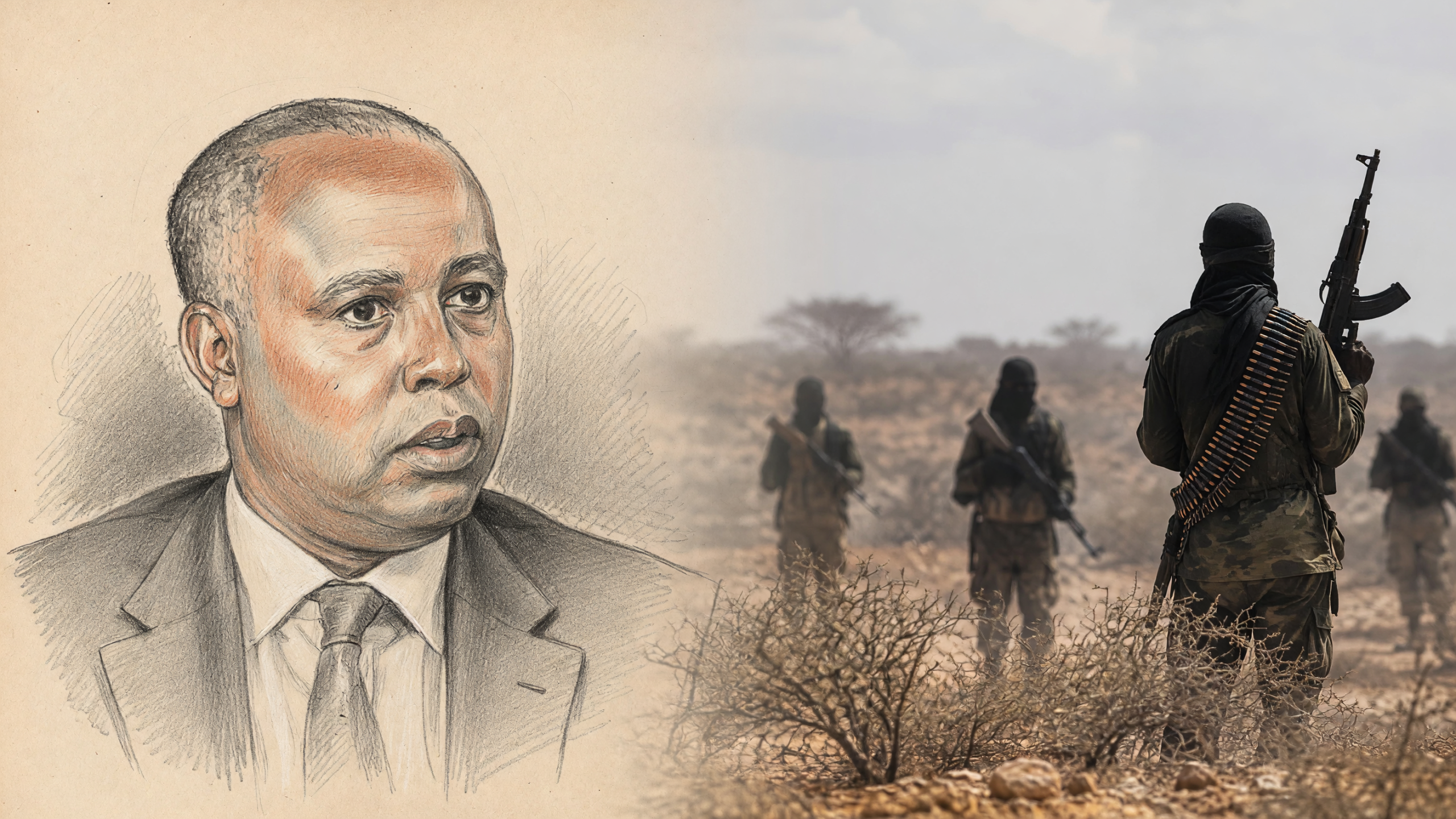
The ambassador’s warning was direct. “The moment, for example, Ethiopia recognizes Somaliland, the Somali government will request Ethiopia to withdraw its troops from Somalia. And Al-Shabaab will get a free ride to attack both Somalia and Somaliland, even a spillover effect will come also to Ethiopia.” He described the group as a dangerous organization with links to Al-Qaeda, Boko Haram, and others, and said Ethiopian forces were deployed in Somalia specifically to fight it. Cellier’s follow-up captured the implication of his remarks: for now, recognition is off the table because of the risk of triggering Al-Shabaab attacks.
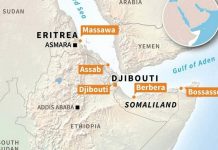
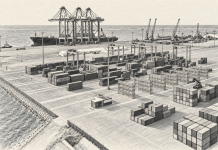
That framing treats recognition less as a question of principle than as a sequencing problem. Ethiopia’s interest in Somaliland is not new, and it is not only political. Landlocked since Eritrea’s secession in 1993, Ethiopia depends heavily on Djibouti for its trade. In January 2024, Addis Ababa and Hargeisa signed a memorandum of understanding that reportedly traded possible recognition for Ethiopian access to a stretch of Somaliland’s coast, including a path toward the port of Berbera on the Gulf of Aden. Mogadishu treated the agreement as an attack on Somalia’s territorial integrity. The diplomatic row that followed pulled Somalia closer to Egypt and Eritrea, unsettled Ethiopia’s role in the African Union mission in Somalia, and was only eased after Turkish mediation produced the Ankara Declaration. Ethiopia never completed the recognition the memorandum had floated.
The security calculation Ambassador Anteneh described sits underneath that diplomatic pause. Ethiopia has been a central troop contributor in Somalia since its intervention in 2006, later as part of the African Union Mission in Somalia (AMISOM), then the African Union Transition Mission in Somalia (ATMIS), and now the African Union Support and Stabilization Mission in Somalia (AUSSOM), which began operating in January 2025. Those forces, alongside the Somali National Army and clan militias, have been the main check on Al-Shabaab, which still controls large rural areas of southern and central Somalia, runs shadow administrations, and taxes trade. A government offensive in 2022–2023 recovered territory; Al-Shabaab took most of it back in 2025. The war has settled into a stalemate, with neither side able to hold a decisive advantage.
From Addis Ababa’s point of view, a Mogadishu demand that Ethiopian troops leave would not be an empty gesture. Somalia has already objected to Ethiopia’s presence over the Somaliland memorandum, and the size of Ethiopia’s contingent under AUSSOM was left undisclosed even after the two governments said cooperation would continue. If recognition prompted a formal request for withdrawal, the gap would fall on a Somali security sector that still relies on foreign funding, training, and logistics. Al-Shabaab has shown it can exploit exactly that kind of opening. It has also struck outside Somalia, including in Kenya, which underpins the ambassador’s claim of a possible spillover into Ethiopia.
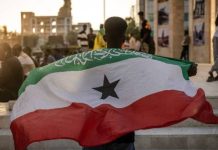
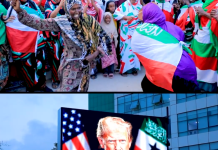
The argument is not only about southern Somalia. Somaliland has governed itself since declaring independence in May 1991, with its own government, currency, and armed forces, and it held a presidential election in November 2024. It has never received broad international recognition. Israel became the first UN member state to recognize it, on 26 December 2025, a decision that sharpened the debate without resolving it. Somalia, Egypt, Turkey, and Djibouti opposed the move. The African Union and IGAD have not followed. For Ethiopia, Israel’s step changed the diplomatic weather but did not remove the cost of going next. A second recognition, from a neighbor with troops on Somali soil and a live dispute over sea access, would land differently from a recognition issued from outside the region.
The ambassador’s remarks also hint at a wider strategic context. Ethiopia’s push for a coastline drives its tensions with Eritrea, and fighting in Tigray in 2026 has raised the risk that a domestic crisis could widen. Diversifying away from Djibouti through Berbera remains commercially attractive, and the United Arab Emirates has invested heavily in that port. But a recognition that costs Ethiopia its place in the Somali security architecture, and invites retaliation from a government aligned with Egypt and Turkey, would trade one vulnerability for several others. That is the “delicate issue” Anteneh said Ethiopia is still weighing.
The two neighbors have more binding them than the argument over recognition. Ethiopia has been Somaliland’s principal regional partner since Hargeisa declared independence in 1991: a trade corridor, a security interlocutor, and, through the port of Berbera, a possible answer to Addis Ababa’s dependence on Djibouti. The January 2024 memorandum of understanding made that partnership explicit, linking Ethiopian access to the Gulf of Aden with a path toward recognition. It was never implemented. Mogadishu called it a violation of Somali sovereignty, Egypt and the Arab League objected, and Turkish mediation produced the Ankara Declaration, which restored Ethiopia’s dialogue with Somalia and left the memorandum dormant. Israel’s recognition of Somaliland on 26 December 2025 reopened the question without answering it.
None of this means the 2024 memorandum is dead, or that Ethiopia has abandoned the idea of recognition. It means Addis Ababa has treated recognition as inseparable from the fight against Al-Shabaab, Mogadishu’s consent, and the risk of a regional cascade. The ambassador’s exchange with Cellier states that hierarchy plainly: troops first, recognition later, and only if the security bill can be paid.