





‘When you have children, you have no choice’. Trapped between ruthless militants and the worst drought in four decades, a young Somali mother made an agonising decision.
It’s mid-morning and 30-year-old Aisha Sugal crumples onto the dusty ground. Seven months’ pregnant, she has just walked 30km a day for the past 10 days, with no food and very little water.
Her one-year-old daughter Hamdo and two-year-old son Mohamed rode next to her most of the way in a donkey cart. But like any little baby, Hamdo often cried to be picked up and carried. This loving mum obliged.
She has arrived with about two dozen others from her village, mostly women and children. Their journey has led them to the aid camp at Ladan, south-west Somalia, where 30,000 others have come over the past two years.
Aisha Sugal, a mother of four children under five, walked 300km through the desert with her two youngest, including two-year-old Mohamed (right). Foreign Correspondent: Matt Davis
Aisha’s clearly exhausted and in pain. Her shoulder hurts from carrying Hamdo and her back is sore from sleeping on the ground. But she’s relieved.
“I feel like I’ve come from so much hardship, so many problems and so many difficulties,” she says. “Now I feel like I’ve come to a good place I could settle in.”
I wonder how awful the place she has come from must have been.
Not far from where we are talking, a woman collapses from hunger while going from tent to tent begging for food. Other residents pick her up and find her some food and water.
These people have all been through hell but their sense of humanity, and dignity, is immense.
Aisha’s impossible choice
The camp Aisha has come to is in Dolow, a small town where the population has exploded with the arrival of 150,000 people seeking refuge.
Zoom out to the broader picture in Somalia and it gets so much worse – more than a million displaced, more than six million without enough food to eat.
Parts of the country are at risk of falling into famine later this year, a technical term that seems almost meaningless here. People are clearly hungry and malnourished, and people are dying as a result.
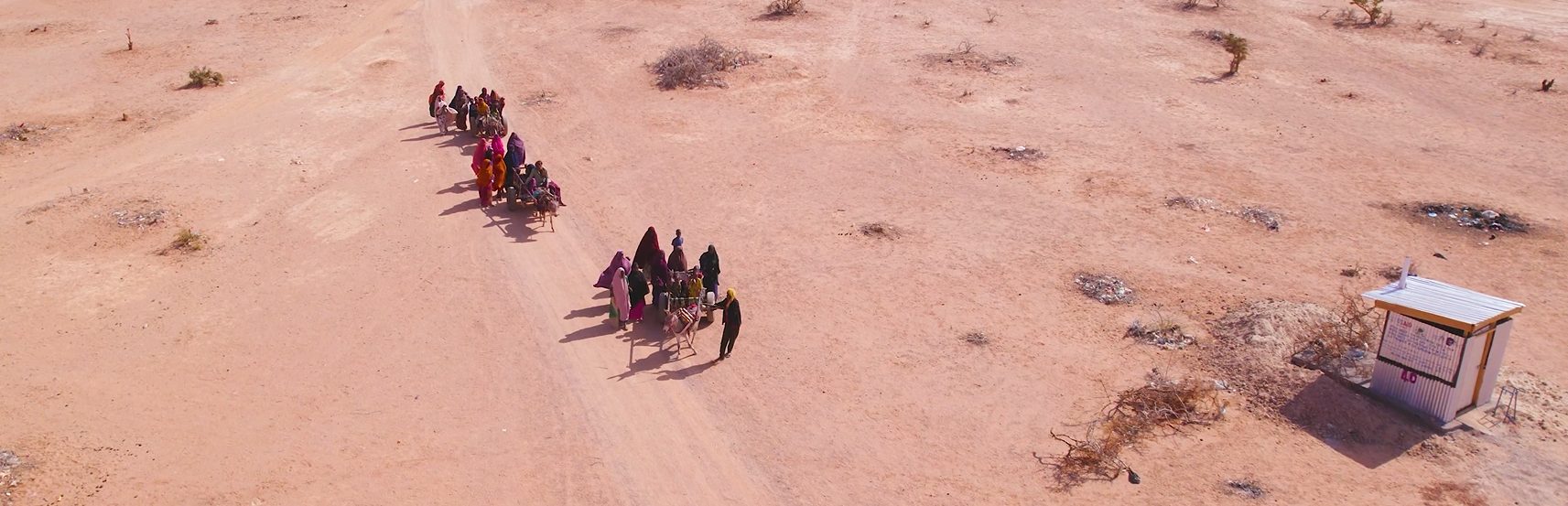
 Women at an unnamed camp in northern Somalia. There are no aid agencies at this desert settlement. Foreign Correspondent: Matt Davis
More than 40,000 Somalis may have died last year because of this hunger crisis, according to a UN report released this week. Half were children under five. It’s forecast that 30,000 more people may die before June.
There are two main drivers of Somalia’s humanitarian crisis: a record-breaking drought, and an ongoing conflict with Al Qaeda-affiliated Al Shabaab militants.
The drought is the result of five failed rainy seasons, with a sixth on the horizon.
“People say that this is the worst drought in 40 years, but that’s wrong,” says Adam Abdelmoula, the UN humanitarian coordinator for Somalia. “This is the worst drought in Somalia’s history, period.”
Extreme weather is not uncommon in the Horn of Africa, but climate change is making the intensity and frequency of droughts worse. Instead of happening every 10 to 15 years, now it’s every five.
Millions of head of livestock have perished. In the good times, those animals provide families with milk, meat and an asset to sell when they need cash.
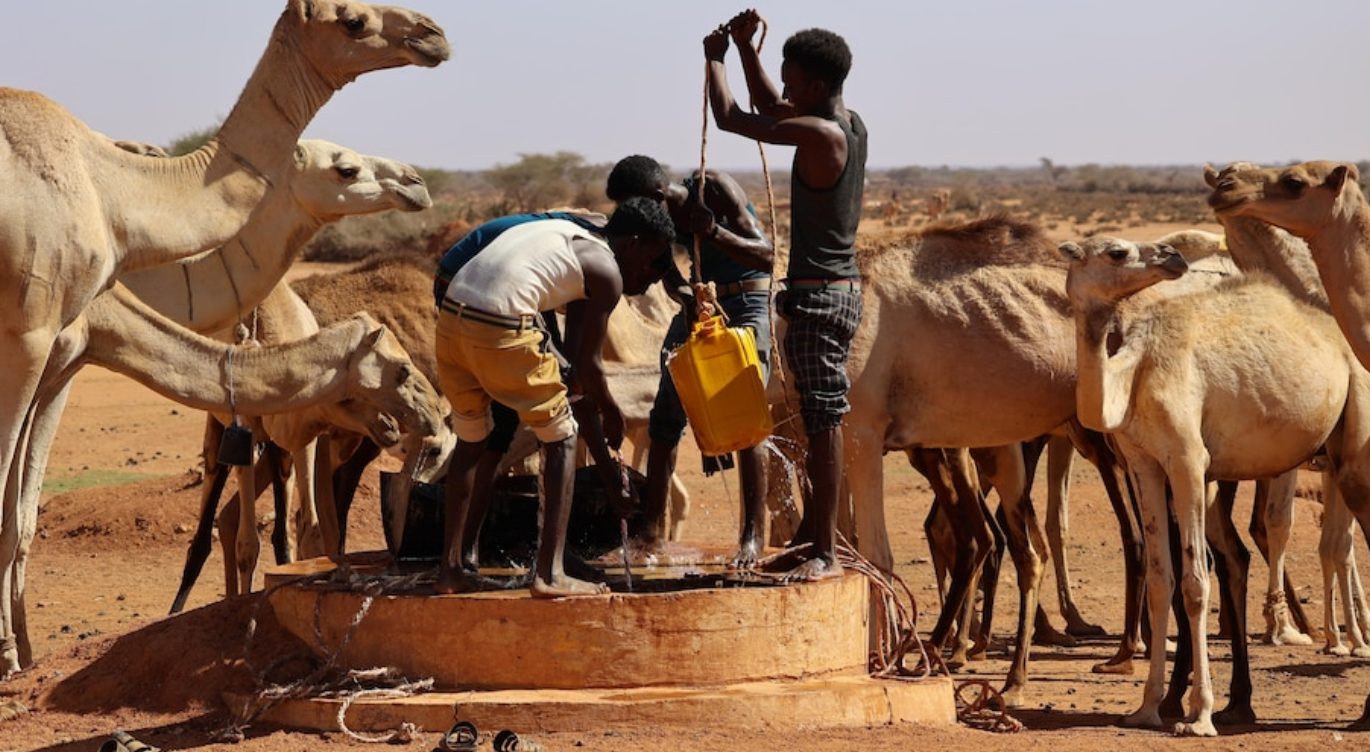 Men water their camels from a communal well in the bone-dry desert. Foreign Correspondent: Matt Davis
Before coming to Dolow, Aisha lived with relatives who owned livestock. She relied on their generosity for her own family’s survival. But as the drought wore on, the animals died, and together their situation became dire.
[pullquote]“Those relatives have come down to the same level as me – someone who does not have anything,” she says.[/pullquote]
Many of the drought-affected areas are also controlled by Al Shabaab, which imposes heavy taxes on the populations it controls, forcibly recruits young men to become soldiers, and metes out brutal punishments on those who don’t obey.
Already pushed to the brink by the drought, some communities have started fighting back against the militants with the help of government forces. But their rebellion comes with enormous danger.
“Those who decide to side in any way with the government risk collective punishment,” says Abdelmoula. Al Shabaab has poisoned wells and destroyed schools as retribution, he adds.
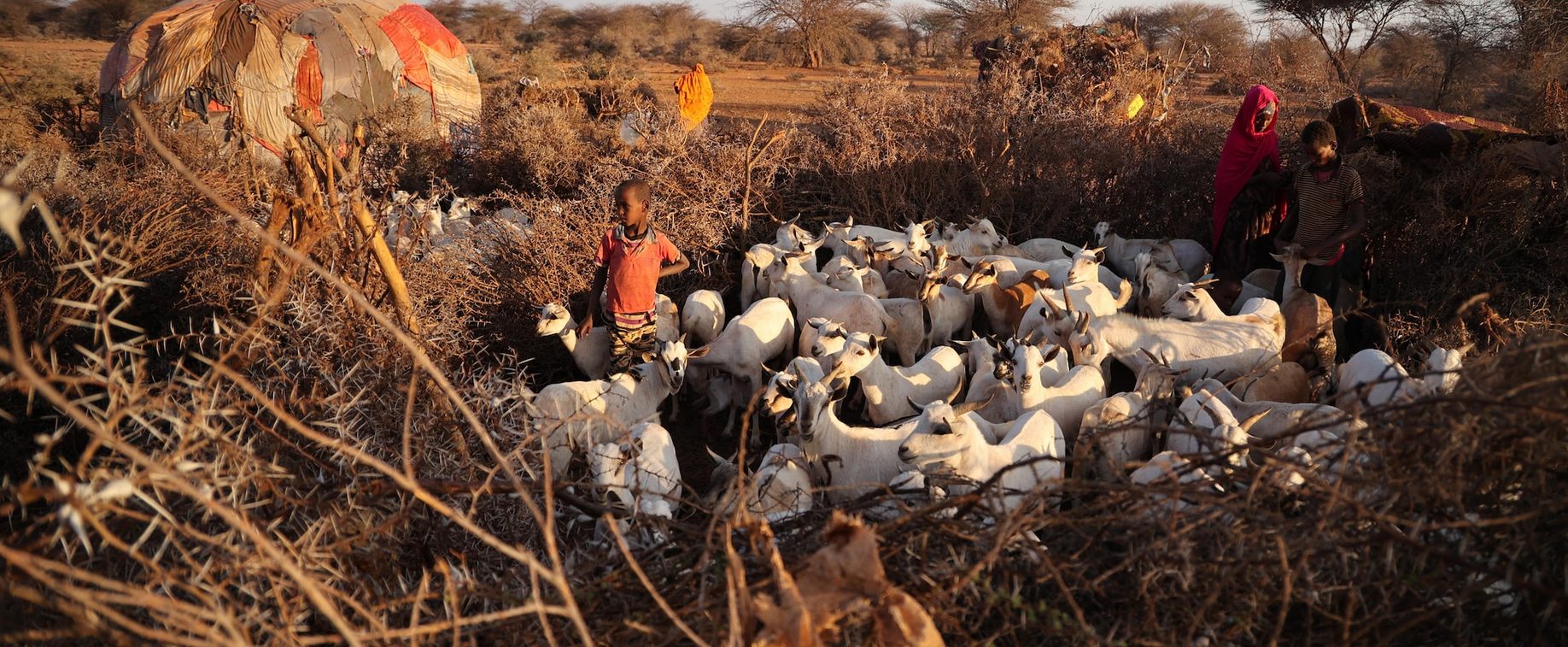 A family protect their most precious commodity – a herd of goats. The current drought in the Horn of Africa is thought to have killed a million head of livestock. Foreign Correspondent: Matt Davis
And not all communities are in a position to take on the insurgents. For many like Aisha, their only option is to flee.
“Where I come from, Al Shabaab hide in the bush and if you own anything they come and take it from you,” she says. “Even though we had almost nothing, they would take it anyway.”
The breaking point came when Al Shabaab forbade her from collecting firewood from the bush.
“When you only survive with what is on the trees anyway and you are told not to touch it, I decided I had to leave,” she says. “I just felt when you have children, you have no choice.”
But then came an even more difficult choice, one no mother should have to make. The strangers who gave her space on their donkey cart to help her escape only had room for two of her four children.
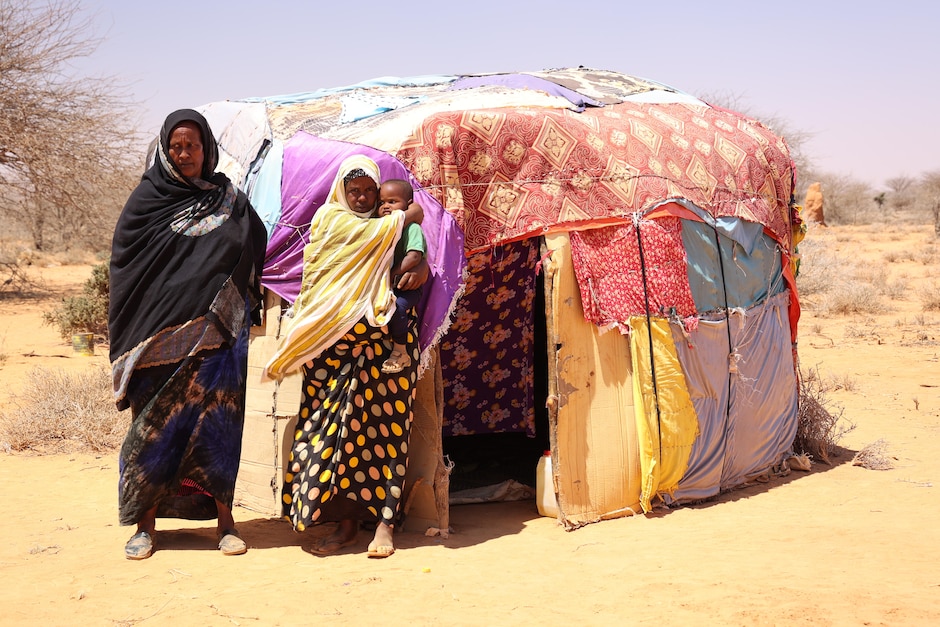
A woman at the unnamed camp in northern Somalia. Foreign Correspondent: Matt Davis
Aisha had to leave her three- and four-year-old daughters behind with her husband.
“How can I not miss my husband and two children?” she says. “[But] listening to your own children crying with hunger, I could not stay there.”
For now, Dolow is under government control, but our security guards tell us Al Shabaab militants are never far away.
“Two hundred kilometres away?” I ask. Our head of security laughs, “More like 20.”
‘By then it’ll be too late’
“We have no food,” one woman says to an aid worker who is busy trying to register the first group. As is often the case in humanitarian crises, it’s women and children who suffer the most.
“It’s the mothers who are staying awake because the children are crying in the middle of the night because they’re hungry,” says Sadia Allin, the Somalia director for PLAN International.
[pullquote]“It is the mothers who are making very hard and horrifying decisions, sometimes to boil water so the kids will think that there will be food coming.”[/pullquote]
The aid worker comes to do a health check on Aisha’s children, Hamdo and Mohamed.
She measures the boy’s arm with a tiny tape measure with red, yellow and green markers. Green means healthy, yellow means moderately malnourished, red means severely malnourished.
Mohamed’s arm fits in the yellow category, but it’s only two millimetres from red.
Containers are filled from a communal tap in Ladan camp. Foreign Correspondent: Matt Davis
A young boy waits with the water containers. Foreign Correspondent: Matt Davis
Waves of people continue to pour into the Ladan camp in south-west Somalia, where aid agencies are providing basics like water, food and shelter. Foreign Correspondent: Matt Davis
Aisha immediately gets handed packets of “Plumpy Sup”, a nutritious peanut-based food paste that should rapidly bring her hungry children back to health. The packets only cost a few cents – a pittance to save a child’s life.
Once she is registered with the aid agencies, she will receive $US80 a month for six months to buy food, and more nutrition supplements for her kids.
“It’s not what you need to live a good life, it’s just keeping people from death’s door,” says Petroc Wilton, spokesperson for the World Food Program in Somalia.
The World Food Program is feeding more people in Somalia than ever before. It’s remarkable they’ve been able to do even that – the war in Ukraine has captured the focus of traditional western donors, particularly in Europe.
The majority of the funding to help Somalia over the past year – more than half – has come from a single donor, the United States.
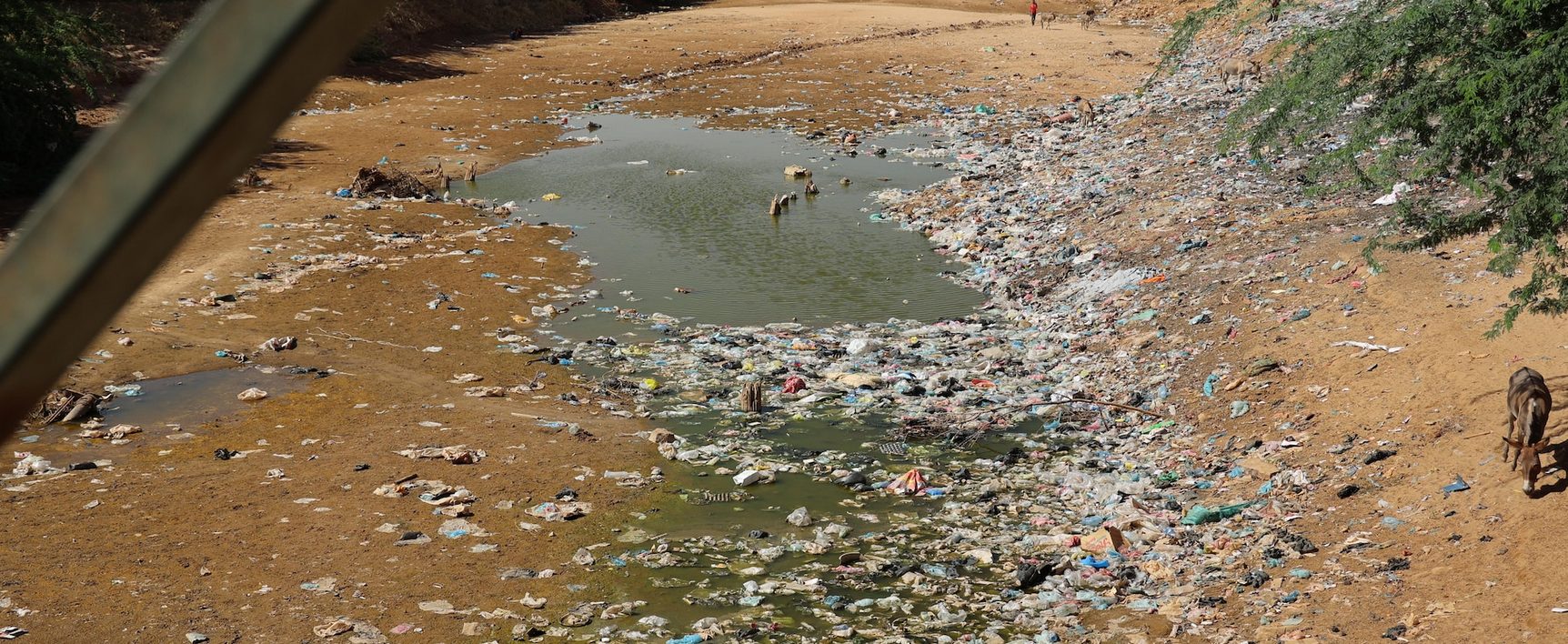 The remnants of a river on the Somalia-Ethiopia border near the town of Dolow. Foreign Correspondent: Matt Davis
“The traditional donors more or less wash their hands from Somalia,” says Abdelmoula. “And if that continues, we will see a huge catastrophe in this country this year.”
Australia’s response has been underwhelming too. In 2011, the Australian government gave more than $100 million to the famine and hunger crisis in the Horn of Africa, including $61 million directly to Somalia. It was one of the top five donors globally.
This year, it’s given $25 million towards the wider Horn of Africa crisis, with only $5 million of that earmarked directly for Somalia.
Over the past year, Somalia has come very close to having a “famine” officially declared, but hasn’t crossed the very specific, technical nutrition and mortality thresholds.
“If any country is waiting for a declaration of famine to really get involved, to really act, that must not happen because by then it’ll be too late,” says the World Food Program’s Petroc Wilton.
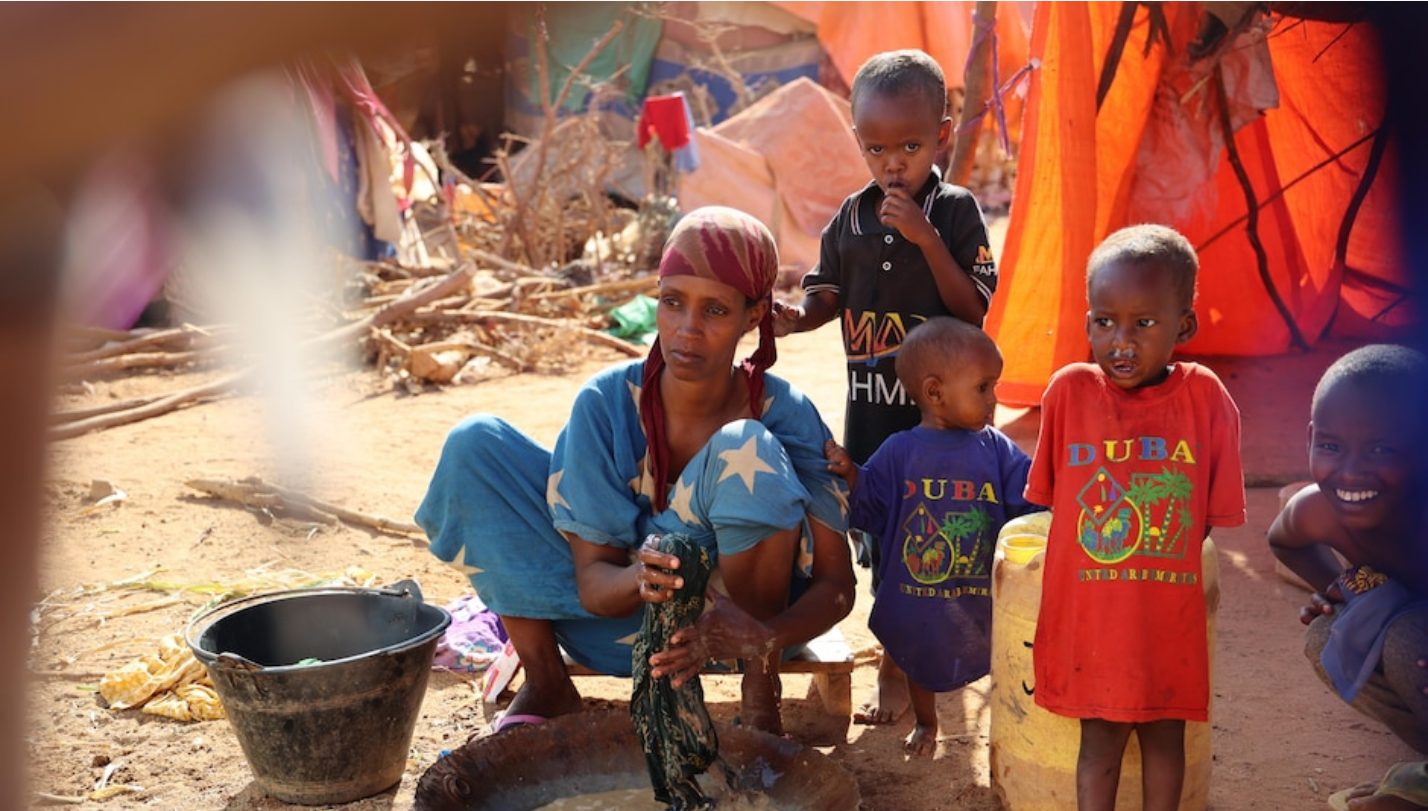 A mother washes clothes in a pan at the refugee camp at Dolow. Foreign Correspondent: Matt Davis
One of the biggest lessons learned in the last famine in 2011 was that getting aid to people early is the key to saving lives. And yet, financial support from major donors for this crisis has often come at the eleventh hour.
Right now, humanitarian agencies only have enough money to give assistance at the current levels until about the end of April – just five weeks from now.
Beyond that, they may have to dramatically reduce the number of people they are helping – millions may miss out on life-saving assistance.
“If the world turns away from Somalia … the potential death toll here now could be absolutely catastrophic,” says Wilton.
A fragile hope of reunion
Aisha is sitting on the ground after spending her first night at the camp. She slept on a mat on the ground in the open with her children.
Two-year-old Mohamed wanders over and Aisha wipes his snotty nose. He plays with a string attached to a ball that looks like it is made from a sock.
One-year-old Hamdo – a busy, cheeky girl – is sucking on a packet of Plumpy Sup and comes over to her mum for a cuddle. She stares at me with the most intense eyes and starts squeezing the small microphone that I’ve clipped to Aisha’s hijab for our interview.
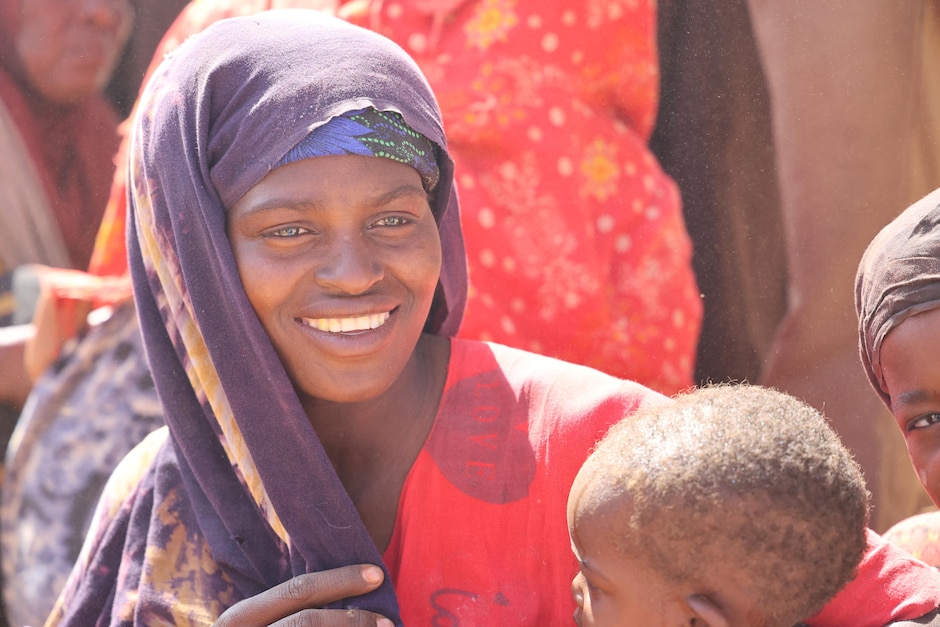 Aisha hopes to be reunited with her husband and elder kids if the can find the money to cover their travel. Foreign Correspondent: Matt Davis
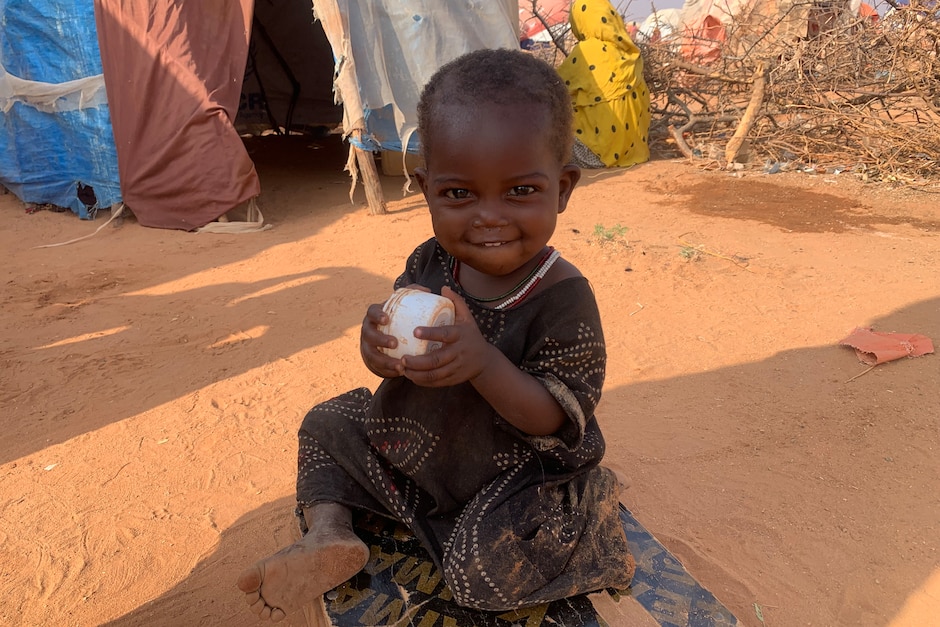 Aisha’s daughter Hamdo plays with a plastic jar. Foreign Correspondent: Stephanie March
Aisha and her one-year-old daughter Hamdo (right) after receiving much-needed food and water. Foreign Correspondent: Matt Davis / Stephanie March
We laugh, and for the first time Aisha smiles.
“They are playing now and have had a rest and now they have something to eat, thanks to God,” she says.
[pullquote]“We are hoping for bigger and better things as well.”[/pullquote][pullquote][/pullquote]
Aisha’s quiet optimism is remarkable. She has no possessions other than the clothes she and the kids are wearing, and a mobile phone on which she can receive cash transfers from aid groups and contact her husband back home.
She looks forward to building her own tent when she can find some materials, she says, and to giving birth to her baby two months from now.
But she worries for the two daughters she left behind. She desperately wants them to join her in the camp, but that would require money to pay for their travel, something she doesn’t have.
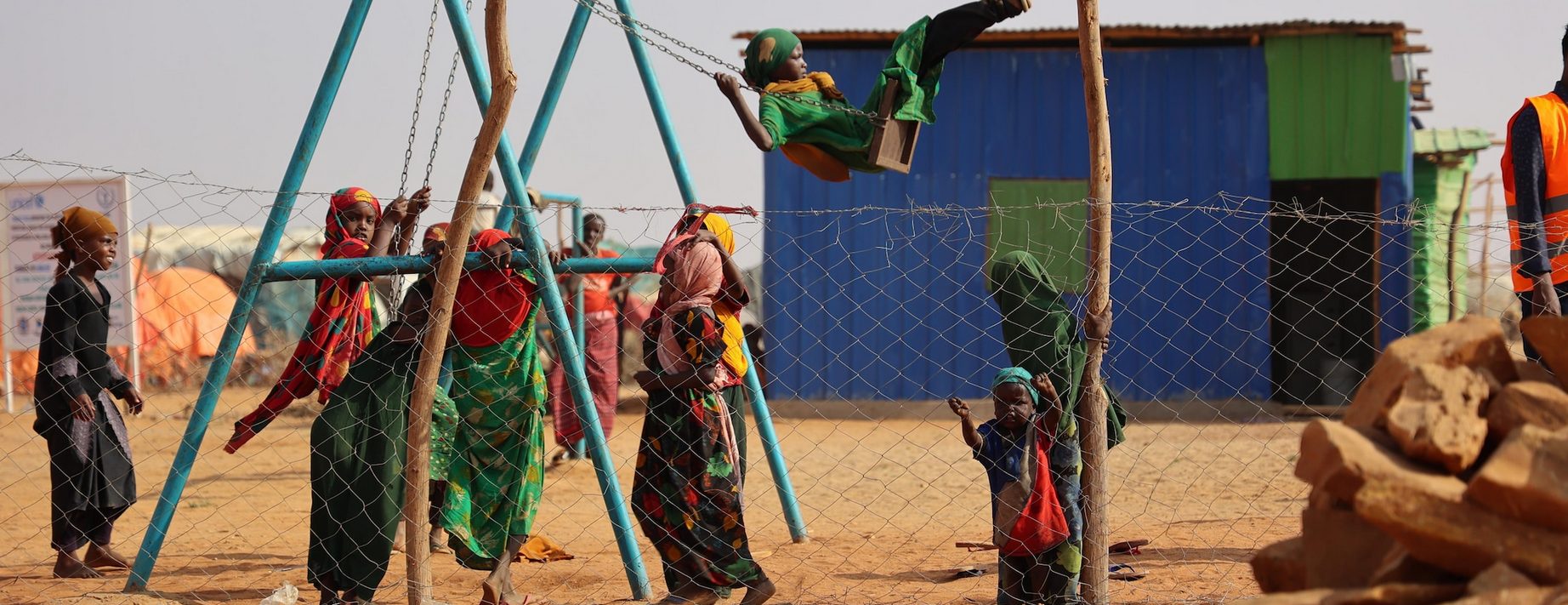 Over a million people in Somalia have been displaced in the current crisis. Most who end up in camps like these will never leave. Foreign Correspondent: Matt Davis
She hopes somehow to find the resources to bring them to her.
Most of the people who have been driven to these camps because of the current crisis – more than a million across Somalia already – will never leave.
As we are saying goodbye to Aisha, the mood in the camp quickly goes from tense to panicked. One of our minders yells “Go, go!” and our armed security team quickly hustles us to the armoured cars.
A guard has overheard a man on the edge of the camp on a mobile phone telling someone that two foreigners are in the camp. He was giving them our exact location.
With Al Shabaab only kilometres, away our security team can’t leave anything to chance. We’re whisked away to safety, knowing that so many Somalis don’t have the same option.
Watch Somalia: A Story of Survival on YouTube and ABC iview.
By Stephanie March in Somalia with photography by Matt Davis
ABC