






For decades, international partners have praised Somaliland’s democracy while working within frameworks that privilege Somalia’s claim over Somaliland’s consent. From development finance to the diplomacy surrounding Las Anod, the result has too often been partnership on unequal terms.
A peculiar bargain lies at the heart of Somaliland’s relationship with much of the international community. Build institutions, hold elections, maintain security and demonstrate the habits of responsible government — but do not expect those achievements to overturn the diplomatic assumptions that keep you subordinate.
For decades, the international community has asked Somaliland to prove itself within a system reluctant to reconsider the framework through which it assesses that proof.
Its elections can be welcomed. Its peaceful transfers of power deserve applause. Its authorities can be useful partners. Yet when development architecture, diplomatic representation and constitutional status come into view, the organising principle has repeatedly been Somalia’s territorial claim rather than Somaliland’s political consent.
The complaint is not that Somaliland has received nothing. International assistance and cooperation have existed, and denying them would replace analysis with grievance. Nor does democratic performance automatically confer a legal right to recognition.
The charge is stronger: partners have repeatedly recognised Somaliland’s practical distinctiveness without consistently protecting it from a Somalia-centred political project.
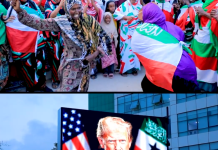
Israel’s recognition of Somaliland in December 2025 broke an important diplomatic barrier. But, as an Atlantic Council analysis published in January 2026 observed, recognition by one state does not eliminate the constraints attached to Somaliland’s contested status. Nor does it erase the history of policies that have accommodated Somaliland’s development as an exception rather than as a relationship in its own right.
That history deserves scrutiny. Much of the evidence is contained not in hostile accusations, but in the language of partnership itself.
Already on the record
Somaliland’s institutional record is not an obscure argument advanced only by its representatives.
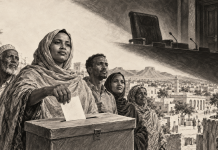
The 2013 Somali Compact, a foundational international engagement document, described Somaliland’s development as the product of more than two decades of grassroots peacebuilding and state-building. It acknowledged a resilient institutional structure that brought together public institutions, traditional and religious authorities, business, and civil society.
This recognised a political achievement: a locally constructed order with its own sources of legitimacy.
The document also identified shortcomings, including gaps in representation, institutional capacity and accountability. The document did not present Somaliland as a finished democracy. It was presented as a distinct development context whose gains needed protection.
Nearly a decade later, the proposed Somaliland Partnership Act, reported to the US Senate in 2022, made the distinction unusually explicit. It cited Somaliland’s “democratic credentials, including peaceful transfers of power following elections” and its relative stability.
The proposal said its security situation and development challenges differed significantly from those in Mogadishu and other parts of Somalia. That required a different approach and avoidance of a “one-size-fits-all” policy.
The bill did not become law. Its importance here is evidentiary: figures within the American policy establishment had identified precisely the mismatch Somaliland’s advocates describe. The congressional text even declared that Somaliland’s status should not obstruct deeper cooperation.
Yet the same proposal defined Somaliland as a “semi-autonomous region” of the Federal Republic of Somalia.
Recognition of difference sat alongside a definition that subordinated it.
That contradiction captures the wider relationship. Somaliland’s institutions are sufficiently real to cooperate with, sufficiently capable of placing demands on, but not consistently autonomous enough to determine the terms of their external engagement.
Aid on Mogadishu’s Terms
Development documents can make political choices appear administrative. Their vocabulary is reassuring: alignment, coordination, ownership, capacity-building.
But ownership by whom? Alignment with which government? Capacity to build which political order?
The opening vision of the 2013 Somali Compact was unequivocal:
“A new beginning for a sovereign, secure, democratic, united and federal Somalia…”
The Compact was not simply a mechanism for financing public services. It linked international support to constitutional development, federal institutions, and a broader state-building programme that favoured Somalia.
For Somaliland, which rejects incorporation into Somalia’s federal system, that overarching objective was not neutral.
Importantly, there was a Somaliland Special Arrangement. It was described as a “separate and distinct part” of the Compact, developed through separate processes and intended to operate through separate government systems and mechanisms.
Those protections matter. They contradict any sweeping claim that the Compact simply handed Somaliland’s development administration to Mogadishu.
But they also expose the problem the arrangement was designed to manage. Somaliland’s distinct political and institutional reality required exceptional protection within a framework whose stated goal was a united federal Somalia, created at the expense of Somalilanders and the long struggle to restore their once-lost sovereignty.
The Special Arrangement promised an “equal partnership” between Somaliland’s government, its people and the international community. It committed partners to Somaliland ownership, Somaliland-specific approaches and the strengthening of Somaliland institutions.
These were not favours. They were acknowledgements that effective development required engagement with the institutions actually governing people’s lives.
The test of subsequent policy should therefore be demanding: did partners preserve those commitments, or allow the diplomatic preference for Somali unity to narrow them?

Calling a framework technical does not remove its politics. Where authority is disputed, the identity of the government entitled to approve, coordinate or represent development is itself part of the dispute.
The Admission Hidden in the Paperwork
One of the most revealing passages in the Special Arrangement concerns how assistance was delivered.
The Compact acknowledged that external financing relied on intermediaries to administer funds and implement programmes largely outside government structures. It then recognised that such arrangements could not fully support sustainable institutional capacity, Somaliland ownership or mutual accountability.
Here was an admission from within the partnership architecture: funding development activity is not the same as building the institutions responsible for development.
A project can produce a useful result while leaving the public administration little better equipped to sustain it. A government can be consulted without exercising meaningful authority. A community can benefit from assistance while remaining excluded from the decisions that organise it.
None of this establishes that every intermediary was wasteful or every donor acted in bad faith. Financial safeguards and independent implementation can be necessary.
But a model that continually bypasses institutions cannot indefinitely be defended as a route to strengthening them.
The same scrutiny should apply to financial transparency. The proposed US legislation sought to identify not merely assistance broadly targeted at Somalia, but the portion explicitly intended for Somaliland and the portion ultimately used there.
Those are different quantities.
A Somalia-wide headline total cannot establish what reached Somaliland, through which institutions, at what administrative cost or with what lasting effect.
There is no comprehensive financial audit in the evidence considered here that would justify declaring an exact sum “denied” to Somaliland. Inventing one would weaken the case.
The policy demand is simpler and harder to evade: publish the allocations, disbursements, implementing costs and results separately. A partnership should be able to show its partner where the money went.
Consent, not a signature
Somaliland’s constitutional objection is often reduced to the claim that it was “not a signatory” to Somalia’s federal constitution.
The underlying issue is important, but the language should be precise. A constitution is not ordinarily an interstate treaty awaiting every territory’s signature.
The stronger point is political: Somaliland’s government rejects the federal order and is not on record as a consenting constituent government. Participation by individuals from Somaliland in Somalia’s institutions does not equal consent by Somaliland’s governing institutions.
The Africa Center for Strategic Studies’ 2026 analysis describes Somaliland as having rejected a role in Somalia’s federal structure while remaining self-governing.
International recognition of Somalia gives Mogadishu a powerful diplomatic position. It does not, by itself, demonstrate that Somaliland’s population has accepted the constitutional relationship claimed on its behalf.
Partners can maintain their legal positions while acknowledging this distinction. They need not recognise Somaliland tomorrow to avoid presenting federal incorporation as an administrative fact.
A genuinely open political dialogue cannot begin with one party’s preferred outcome embedded in every surrounding institution.
Nor is Somalia’s own federal settlement beyond dispute. The same Africa Center analysis describes recurring friction over the division of authority between federal and member-state institutions.
Supporting Somalia’s recovery is legitimate. Treating that unsettled system as Somaliland’s unquestionable destination is a separate choice.
The Un-Ratified Union
The historical argument is equally vulnerable to slogans — on both sides.
It is inaccurate to say simply that an Act of Union never existed. It is also misleading to imply that the union of 1960 was completed through an uncontroversial, mutually executed instrument whose legal formalities require no further examination.
Somaliland became independent from Britain on 26 June 1960. Union with the former UN Trust Territory followed on 1 July.
Somalilandlaw, a specialist resource presenting Somaliland’s legal perspective, reproduces and discusses the legal history and identifies a serious mismatch. Somaliland’s legislature passed its Union Law on 27 June. The southern legislature approved a different instrument “in principle”. The intended definitive common text was not completed in that form.
The site quotes legal scholarship questioning the validity of the initial instruments and explains that a subsequent Act of Union was promulgated on 31 January 1961, with retrospective effect.
That later legislation must be acknowledged. Whether it adequately resolved the original defects is a legal question; its existence cannot simply be edited out.
But neither can the defects be dismissed as irrelevant paperwork. A union between previously separate territories is precisely the kind of constitutional undertaking in which the terms of agreement, authorisation and consent matter.
This history does not automatically settle today’s sovereignty dispute in Somaliland’s favour. It does establish that the dispute cannot honestly be reduced to a troublesome region refusing an otherwise uncomplicated constitutional inheritance.
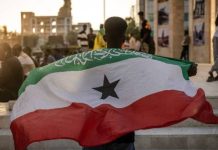
For Somaliland’s advocates, the claim is restoration of a former independent state, not merely departure from an administrative arrangement.
International partners need not endorse that interpretation to engage with it seriously.

Las Anod: Where Partnership Pressure shortchanged Somaliland
The argument becomes most difficult — and most consequential — in Las Anod.
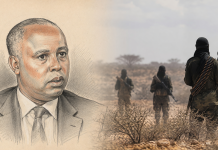
During the 2023 fighting, international partners pressed Somaliland to withdraw forces from around the city. The pressure was explicit.
According to Al Jazeera’s reporting of 10 May 2023, 15 international partners, including the European Union, United States, United Kingdom and Turkey, told President Muse Bihi during an April call that the conflict and uncertainty over delayed elections were seriously affecting discussions about engagement with Somaliland.
They urged him to withdraw to create conditions for a ceasefire and dialogue, and expressed disappointment that he had not committed to it.
This was diplomatic leverage with an acknowledged bearing on the wider relationship.
From Somaliland’s perspective, the implications were obvious. A withdrawal from contested territory could affect effective control, bargaining power and the prospects of restoring an administration. A military step described as temporary could produce a durable political result.
Partners could demand protection for civilians. But a responsible withdrawal proposal also needed to answer difficult questions: who would provide security afterwards? What reciprocal obligations applied to other armed actors? Who would monitor compliance? What would prevent renewed fighting, reprisals or the conversion of a ceasefire measure into an imposed territorial settlement? Would withdrawal be used to redraw internationally demarcated boundaries? Would Somalia use it as a launching base for an eventual military invasion of the rest of Somaliland? Who would prevent Mogadishu from using Las Anod as a base to foment unrest and anarchy in other Somaliland regions such as Sanaag and Awdal?
The public statements described in the reporting did not provide sufficiently detailed answers to those questions.
That is a legitimate basis for criticising the pressure as inadequately safeguarded. It is not proof that partners intended to create anarchy.
That distinction matters because Las Anod’s civilians cannot be reduced to supporting characters in a sovereignty argument.
The same reporting described Amnesty International’s findings that Somaliland forces had indiscriminately shelled the town and damaged civilian infrastructure, including hospitals, schools and mosques. Those findings cannot be omitted from a serious account of the international response.
Nor can local political agency be wished away. Dhulbahante opposition to Somaliland’s rule was central to the conflict. It cannot responsibly be described as nothing more than a claim manufactured in Mogadishu.
Somaliland’s argument for political consent must remain attentive to consent within the territory it claims.
But acknowledging these facts does not absolve international diplomacy of scrutiny. Humanitarian concern and political consequences can coexist. A demand can have a legitimate immediate purpose and still carry inadequately addressed territorial risks.
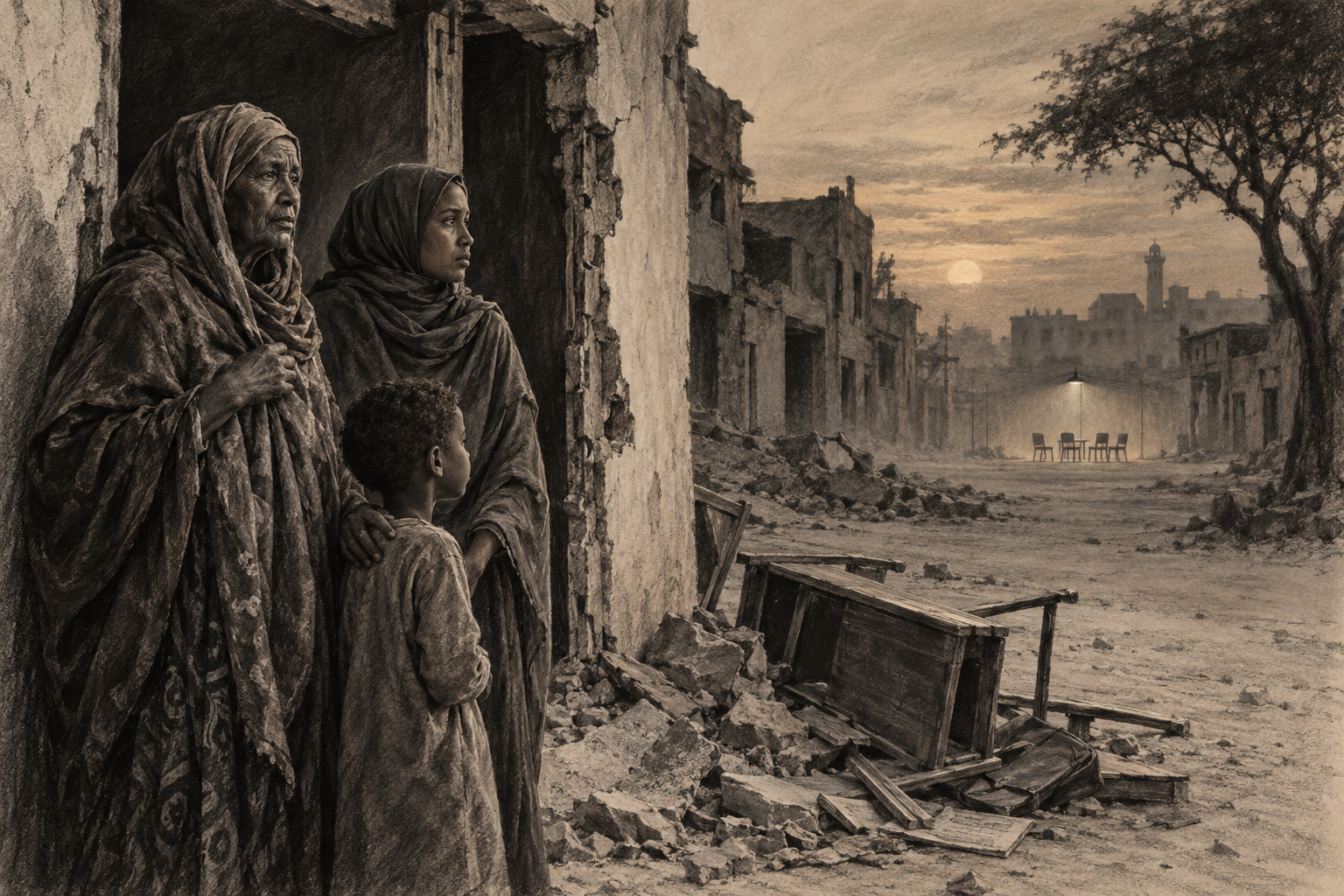
The question is not whether Somaliland should have been immune from pressure. It is whether the pressure formed part of a credible, reciprocal settlement — or whether withdrawal was being demanded more clearly than the arrangements necessary to make it safe.
Standards, not a trap
Somaliland should be held to standards on elections, rights, inclusion and the conduct of its security forces.
The argument for fair treatment weakens, not strengthens, when it portrays every criticism of Hargeisa as hostility to Somaliland.
But standards must not become a mechanism by which Somaliland must repeatedly earn a measure of institutional autonomy that others receive through diplomatic status.
Somalia’s citizens deserve security, public services and representative government. Somaliland’s achievements do not diminish their needs, and aid should not be allocated as a prize for good behaviour.
Equally, Somalia’s need for support does not justify requiring Somaliland to use its development relationship to reinforce Mogadishu’s constitutional claim.
These are not competing humanitarian entitlements. They are distinct questions of political authority.
A credible policy would preserve direct, status-neutral cooperation with Somaliland; publish geographically disaggregated assistance data; support public institutions against agreed financial and rights-based benchmarks; and state explicitly that development agreements neither confer recognition nor establish federal membership.
In Sool, diplomacy should centre civilian protection, meaningful local participation and reciprocal security obligations. It should not pretend that withdrawing one force, without a workable political arrangement, is synonymous with peace.
On status, dialogue should confront the disputed history of the union and the present problem of consent. It should not assume that repeating a sovereignty formula resolves either.
A Failure to Distinguish
No need to invent a secret conspiracy to explain Somaliland’s disadvantage.
Public documents reveal enough: acknowledgement of distinctive institutions; development frameworks organised around a different constitutional project; admitted weaknesses in assistance delivered outside government systems; and explicit diplomatic pressure whose territorial consequences demanded closer attention.
The record also contains safeguards, genuine cooperation and legitimate criticism of Somaliland’s government. Those qualifications do not dissolve the argument. They locate it.
The central failure has been a persistent reluctance to let political practice sufficiently reshape diplomatic policy.
Somaliland has been told that its achievements matter. Too often, the architecture of engagement has told it that they matter only within limits established elsewhere.
Its partners do not have to settle every sovereignty question before treating Somaliland’s institutions and population as more than an exception to someone else’s framework.
They do, however, have to decide whether partnership means respecting a political reality — or merely managing it until it accepts the destination preferred for it.
Somalilanders should not have to choose between access to development and the right to contest the constitutional order in which their partners have placed them.


