






Italian NGO pulls out of Somalia due to ‘systematic fraud’.
‘Because of procurement issues, people got killed in this country.’
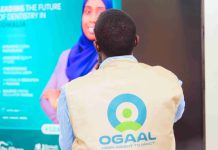
INTERSOS, a UN-funded NGO that provides healthcare and other services to hundreds of thousands of people in Somalia, is pulling out of the country after an investigation uncovered “systematic fraud” that the Italian-based aid group deemed too dangerous to try to resolve.
In an interview with The New Humanitarian, INTERSOS Director General Kostas Moschochoritis said it was a “hard decision” reached after “huge debate” within the NGO. “We realised we couldn’t fix it,” he said, adding that he was “really saddened”.
All the 200 INTERSOS staff may be laid off – mostly in Somalia, but also some in a support office in neighbouring Kenya. No disciplinary action had been taken against staff, Moschochoritis said, adding that redundancies would be compliant with local guidelines.
He explained how INTERSOS had opened an investigation earlier this year after receiving a complaint. That probe, he said, found systematic “manipulation of procedures”, particularly in “procurement” – a term that can cover the purchase of goods or the selection of contractors.
Pressed for more detail, he said, “I cannot go deeper”, adding that discussions were underway with local authorities and other agencies on a “smooth handover” to try to continue services. He said local authorities, donors, and the staff had been informed in recent days.
Twenty INTERSOS projects – including support for the hospital in the regional hub of Jowhar, and programmes around the country involving water supply, child rights, and education – helped some 320,000 Somalis in 2018
The closure will jeopardise services at the Jowhar hospital, unless new support can be found, Moschochoritis said. The regional facility treats 200 Somali patients a day and is the referral facility for a catchment of 250,000, according to the INTERSOS website.
A spokesperson at the office of the regional governor, Ahmed Meyre Makaran, said the news came as a “shock”.
“There is always room to improve,” the governor’s spokesperson said. “If there is something wrong, we can fix it. The city needs the hospital.”
A Somali former NGO manager, who requested anonymity due to the sensitivity of the issues, told TNH that operating in Somalia is known to be “highly risky”, and that corruption in general is widespread. Procurement is particularly vulnerable to corrupt “cartels”, they said. “Because of procurement issues, people got killed in this country.”
Nevertheless, for INTERSOS to close its “whole setup” in the country was an “extreme” reaction, the former NGO manager said, describing it as “a drastic decision”, while adding that travel and health regulations due to COVID-19 had likely hampered project monitoring.
The decision may not only hurt Somalis. It also presents headaches for donors and fund managers attempting to contain fraud in a high-risk environment.
Risk management?
It was in Somalia in 1992, at the hospital in Jowhar, that INTERSOS originally started its work, expanding over the last 28 years to its current size of about €70 million in expenditure in Italy and 17 other countries.
Moschochoritis said the NGO’s operations in Somalia rely on funding from UN agencies, including UNHCR (the UN’s refugee agency), UNICEF, the UN Population Fund, and the World Food Programme. Its 2019 financial report shows 96 percent of its funding came from UN bodies, and four percent from the Italian government.
The Somali former aid group manager, who is familiar with NGO budgets, pointed out that such a high dependence on UN grants – and therefore little to no unrestricted income – would make it harder for an NGO such as INTERSOS to cover its overheads.
INTERSOS reports a 2019 budget of €4.3 million for Somalia. One of its largest operations was supporting the hospital in Jowhar, about 90 kilometres northwest of the capital, Mogadishu.
The largest share of the INTERSOS Somalia 2019 budget was $3 million from the Somalia Humanitarian Fund (SHF), which is managed by the UN’s emergency aid coordination office, OCHA. It has received $15.5 million since 2011.
The SHF gives grants to aid agencies operating humanitarian projects – based on the recommendations of a local advisory group and specific sectoral “cluster” groups, such as one on health. OCHA handles project monitoring on behalf of about a dozen donor countries that contribute to the pooled fund. The SHF has received $153 million in the last three years – the largest donors being Germany, Sweden, and the Netherlands.
[pullquote]
“It’s in the interest of all Somalis that fraudulent activity is tackled decisively”
[/pullquote]
At least three NGOs funded by the SHF were accused of fraud in 2011-2012, denting donor confidence and earning OCHA a critical review by UN auditors.
However, tighter controls and risk management were praised in an OCHA evaluation published last year. “The SHF’s robust risk management systems have created a virtuous circle, building donor confidence and leading to increased contributions,” it said.
In an emailed response to questions, OCHA’s Somalia office did not address the specifics of the INTERSOS case, but stated that it manages the SHF in a “robust risk-based approach”.
Another senior aid official familiar with Somalia, who asked for anonymity in order to comment freely, said the NGO’s decision to withdraw “can be understandable”. However, they said local authorities should “punish those responsible.
“It’s in the interest of all Somalis that fraudulent activity is tackled decisively, and [that] when uncovered, learning takes place to prevent fraud in future.”
The senior aid official added: “Operating in high-risk environments will never be easy, and we need to keep devising more and better ways to monitor and manage risks.”
INTERSOS is not the first foreign NGO to leave Somalia. MSF pulled out in 2013 after saying local authorities had “tolerated and accepted attacks” against its staff. It partially returned in 2017.
UNHCR spokesperson Babar Baloch confirmed its funding of $2.5 million to INTERSOS over the last three years. Baloch told TNH that the UN agency’s monitoring and audit processes had not indicated any issues with INTERSOS, but said it would look into the possibility that UNHCR funds may have been misused.
INTERSOS told UNHCR on 6 November that its funding was “unlikely to have been impacted” by fraud, Baloch said.
A spokesperson for WFP said it would be seeking a smooth handover of a single project, and UNICEF said its internal auditor would be liaising with INTERSOS. The UN Population Fund did not respond to questions before publication.
Source: The New Humanitarian


