








When Israel formally recognised the Republic of Somaliland on 26 December 2025, the move instantly became one of the most discussed diplomatic developments in the Horn of Africa in decades. For Somaliland, it marked the first formal recognition by a UN-member state since it restored its independence in 1991. For Israel, it opened the door to a new partnership in a strategically important region linking Africa, the Middle East, and the global maritime system.
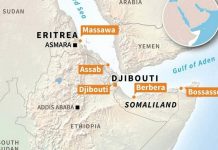
Predictably, the decision also triggered criticism. Officials in Mogadishu quickly framed the recognition as destabilising and promoted allegations that Israel intends to establish a military base in Berbera to launch attacks against the Houthi movement across the Gulf of Aden. Yet when the facts are examined carefully, these claims appear exaggerated and politically motivated. The emerging relationship between Israel and Somaliland is far more likely to produce economic cooperation, security coordination, and regional stability than the kind of militarised scenario critics describe.
The bigger story here is not confrontation. It is partnership.
Somaliland’s Long Quest for International Recognition
For more than three decades Somaliland has functioned as a de-facto independent state. It maintains its own government, parliament, judiciary, currency, and security forces. It holds regular elections and has built one of the most stable political systems in the Horn of Africa.
Yet despite this record of governance and stability, international recognition has remained elusive.
Israel’s recognition therefore carries symbolic and practical weight. It signals that Somaliland’s long-standing case for statehood is gaining attention beyond regional politics. Recognition does not automatically change international law or trigger a wave of diplomatic endorsements, but it alters the conversation. It introduces Somaliland as a legitimate partner in global diplomacy rather than an isolated political anomaly.
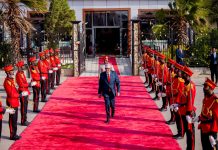
For Somaliland’s leadership, this recognition is not simply about prestige. It opens doors to trade, technology partnerships, infrastructure investment, and security cooperation. As Somaliland President Abdirahman Mohamed Abdilahi has indicated, the government hopes to use the diplomatic breakthrough to strengthen outreach to other major capitals and position the country as a reliable partner in a volatile region.
Why Israel Looked Toward the Horn of Africa
From Israel’s perspective, the recognition also fits into a broader strategic shift.
Over the past decade Israeli diplomacy has steadily expanded its engagement with African states. Israeli leaders have repeatedly described Africa as a key diplomatic frontier, not only for economic cooperation but also for political alliances in international institutions.
The Horn of Africa occupies a particularly important place in that strategy. It sits at the intersection of several global maritime routes. Just across the Gulf of Aden lies Yemen, where Houthi missile and drone attacks have repeatedly targeted shipping lanes in the Red Sea and the Bab el-Mandeb strait.
These waterways carry roughly 12 percent of global trade, meaning disruptions affect not only regional states but the entire international economy.
Israel’s interest in Somaliland must therefore be understood in this wider maritime context. Strengthening partnerships along the Red Sea corridor helps monitor threats to commercial shipping and enhances cooperation against piracy, terrorism, and weapons trafficking.
None of that requires a foreign military base.
The “Israeli Base” Allegation: Separating Claims from Reality
The claim that Israel intends to establish a military base in Berbera has circulated widely in regional media. Yet the evidence supporting this claim is thin.
Even the reports that first raised the possibility acknowledge that discussions remain speculative and that no formal agreement exists. Some Somaliland officials have spoken about exploring “strategic cooperation,” while also emphasizing that current engagement with Israel is diplomatic rather than military.
More importantly, the idea itself conflicts with Israel’s typical security doctrine.
Israel rarely operates large overseas military bases. Instead, its security partnerships abroad generally rely on intelligence sharing, training programs, technological cooperation, and maritime coordination with local partners.
That model is far more consistent with what could realistically emerge in Somaliland:
- information exchange on maritime threats
- surveillance of piracy networks
- cooperation against extremist groups operating in the region
Such arrangements are common across the world and do not represent aggressive military deployments.
Even analysts sympathetic to the strategic logic behind Israel’s recognition acknowledge that establishing a permanent base in Somaliland would expose Israel to direct Houthi retaliation and therefore carries serious risks.
In other words, the military-base narrative is not only unproven — it is strategically unlikely.
Berbera: A Hub of Commerce, Not Confrontation
Berbera’s importance lies first and foremost in its economic potential.
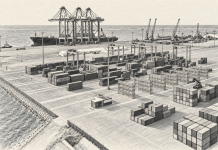
The port already plays a central role in regional trade. It provides a gateway for Ethiopian imports and exports and serves as a key logistical link between Africa and the Middle East. Investments by international partners, including the United Arab Emirates, have expanded port facilities and modernised infrastructure. This development is transforming Berbera into a commercial corridor rather than a military outpost.
For Israel, engagement with Somaliland therefore aligns more naturally with trade, logistics, and technological cooperation. Israeli expertise in areas such as water management, agriculture, renewable energy, and digital infrastructure could contribute directly to Somaliland’s economic development.
At the same time, Somaliland offers Israel something valuable in return: a stable partner along one of the world’s most important maritime routes.
A Partnership With Wider Regional Implications
Beyond bilateral relations, the recognition also reflects a shifting geopolitical landscape around the Red Sea.
Several regional alignments are already emerging:
- Israel–UAE–Ethiopia–Somaliland cooperation around maritime trade and security
• Turkey–Somalia partnerships focused on military training and infrastructure development
• growing interest from India, China, and Gulf states in the Horn’s shipping routes
These dynamics show that the Horn of Africa is no longer a peripheral region. It is a strategic junction connecting African markets, Middle Eastern politics, and global shipping networks.
In that context, Somaliland’s stability makes it an attractive partner for international cooperation.
The idea that engagement with Somaliland automatically threatens regional peace ignores a key fact: Somaliland has maintained relative calm while much of the region has faced conflict.
Supporting stable actors often reduces tensions rather than increasing them.
Why the World Should Pay Attention
The Israel–Somaliland relationship carries lessons that extend far beyond the Horn of Africa.
First, it highlights how diplomacy can emerge from unconventional partnerships. Small states and emerging political entities are increasingly shaping regional dynamics.
Second, it demonstrates how maritime security has become a global concern. Protecting trade routes is no longer the responsibility of one power alone. It requires cooperation between states along the entire corridor.
Third, it shows that stability and governance matter. Somaliland’s decades-long record of relative peace has made it a credible partner even without formal international recognition.
These are positive signals in a region often portrayed only through the lens of conflict.
A Diplomatic Opening, Not a Military Escalation
The recognition of Somaliland by Israel should therefore be understood as a diplomatic opening rather than a military escalation.
It offers Somaliland a chance to deepen international engagement and strengthen economic partnerships. It allows Israel to expand constructive ties in Africa and contribute to maritime security along one of the world’s most important trade routes.
Most importantly, it introduces a new narrative for the Horn of Africa — one centered on cooperation, development, and strategic dialogue rather than confrontation.
Claims of hidden military agendas may generate headlines, but they obscure the deeper reality.
The emerging Israel–Somaliland relationship is not about building bases across the Gulf of Aden.
It is about building bridges across regions.


