








The Government of the Republic of Somaliland blasts off a strong, no-nonsense press release on Wednesday, responding to recent comments made by the President of the Republic of Türkiye denigrating Israeli recognition of Somaliland.
In the statement, Somaliland strongly criticizes the Turkish president’s remarks, describing them as inappropriate interference. According to the government, the comments appear aimed at discouraging Somaliland from strengthening its relationships with regional and international partners.
The press release emphasizes that decisions about foreign policy in the Horn of Africa should be made by the governments and people of the region themselves. It cautions against extending external rivalries into the Horn in ways that could undermine regional stability and cooperation.
Somaliland also calls on Türkiye to avoid positions that could heighten tensions in the region. It urges adherence to principles such as mutual respect, non-interference in internal affairs, and respect for sovereign decision-making.
The government reiterates that Somaliland’s engagement with international and regional partners, as well as its continued pursuit of international recognition, is peaceful, lawful, and rooted in the democratic will of its people.
The statement concludes without escalation, framing Somaliland’s position as firm but grounded in established diplomatic principles.
Sovereignty, Strategy, and Regional Realignment
The Government of the Republic of Somaliland’s immediate press release is neither impulsive nor symbolic. It was measured, deliberate, and strategically framed. At its core is a clear message: decisions concerning Somaliland’s foreign policy, partnerships, and future are not subject to external veto.
The response follows public remarks delivered by Recep Tayyip Erdoğan during a joint appearance with Ethiopian Prime Minister Abiy Ahmed. In that setting, President Erdoğan reportedly rejected the idea of recognition for Somaliland, stating that such recognition would be “in the interest of no one.” His comments were widely interpreted as reaffirming Türkiye’s support for Somalia’s federal government and its opposition to any diplomatic move that would alter the current status quo regarding Somaliland.
The statement condemns Erdogan’s remarks baring a naked aggression against Somaliland and its people regarding Somaliland’s diplomatic trajectory. It characterizes such remarks as interference aimed at discouraging Somaliland’s engagement with regional and international partners. Yet beyond diplomatic language lies a deeper geopolitical recalibration unfolding across the Horn of Africa.
The Emerging Diplomatic Shift
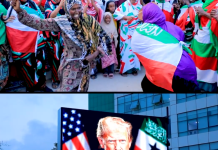
Recent developments—including Israel’s recognition of the Republic of Somaliland—have altered the regional equation. Recognition, whether bilateral or incremental, shifts a long-standing diplomatic stalemate into active geopolitical realignment.
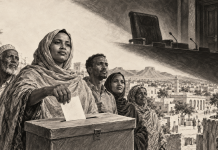
For decades, Somaliland has pursued recognition through peaceful state-building, democratic elections, and institutional consolidation. Its outreach has consistently emphasized legality, stability, and the sovereign will of its people.
Türkiye’s reaction must be understood within this broader context. Ankara has invested heavily in Somalia over the past decade—politically, economically, and militarily. Its training missions, security cooperation agreements, and infrastructure projects have positioned Türkiye as a major external actor in Mogadishu.
Recognition of Somaliland by another sovereign state complicates that equation.
Military Posturing and Strategic Signaling
Reports and imagery circulating this week show visible increases in Turkish military activity in Somalia, including equipment arrivals in Mogadishu and the presence of Turkish-linked security operations in Middle Shabelle. Naval positioning near Mogadishu port further underscores Ankara’s deepening operational footprint.

These moves coincide with heightened diplomatic rhetoric.
Whether coincidental or coordinated, the optics are significant. They suggest that Türkiye views developments around Somaliland not merely as diplomatic shifts but as strategic disruptions.
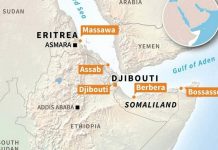
The Horn of Africa sits along critical maritime corridors linking the Red Sea, the Gulf of Aden, and global trade routes. Any realignment in political authority along these coastlines carries consequences for defense agreements, maritime jurisdiction, and energy exploration rights.
The Sovereignty Question
Somaliland’s official position remains consistent:
- Its pursuit of recognition is peaceful.
- Its governance rests on democratic mandates.
- Its territorial jurisdiction is defined and historically grounded.
- Its foreign policy is not subject to external arbitration.
The government’s statement emphasized principles of mutual respect, non-interference, and sovereign decision-making. This framing places the matter squarely within international norms rather than ideological confrontation.
At issue is not merely diplomatic recognition. It is authority over land, airspace, and maritime zones adjacent to Somaliland’s coastline—areas that hold potential economic value in shipping, fisheries, and natural resources.
Energy, Resources, and Strategic Interests
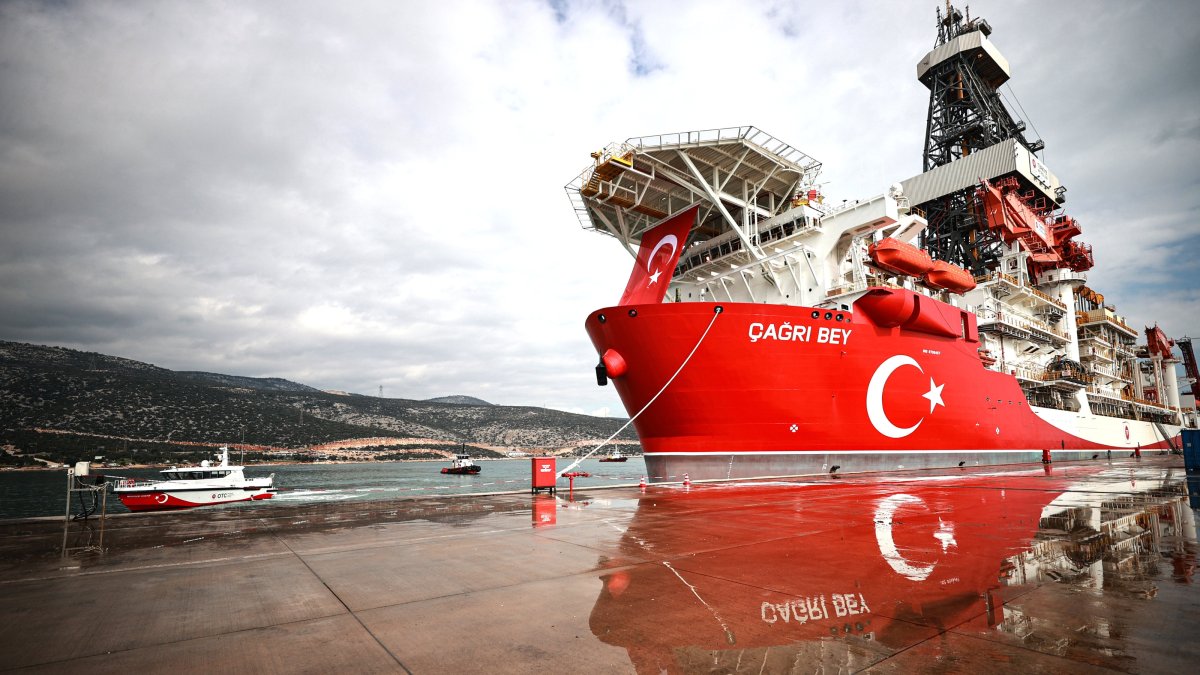
Energy exploration in the wider Somali basin has increasingly attracted international attention. Offshore hydrocarbons, minerals, and untapped maritime resources represent long-term strategic assets.
Türkiye’s extensive engagement with Somalia includes economic agreements that touch on energy and infrastructure development. If Somaliland’s sovereignty gains broader recognition, jurisdictional authority over certain land and maritime zones would not fall under Mogadishu’s control.
This reality alters investment calculations.
Recognition shifts legal clarity. Legal clarity shifts contracts. Contracts shift leverage.
It is therefore unsurprising that diplomatic friction has intensified precisely at this moment.
Regional Balance and External Rivalries
The Somaliland press statement also warned against importing external rivalries into the Horn of Africa. This is a critical observation.
The region has historically been a theater for competing global and regional interests. However, local political agency is increasingly asserting itself. Countries in the Horn are recalibrating partnerships based on economic diversification, security autonomy, and geopolitical hedging.
Somaliland’s expanding diplomatic outreach reflects that same pattern.
Recognition by Israel—if consolidated—signals a willingness by external actors to treat Somaliland as a political reality rather than a frozen dispute.
For Türkiye, which has invested heavily in Somalia’s federal government and positioned itself as a central mediator in Somali affairs, such recognition may be viewed as diminishing influence.
Strategic Miscalculation or Diplomatic Transition?
The sharper tone emerging from Ankara suggests a recalibration rather than collapse. However, strong rhetoric risks reinforcing Somaliland’s narrative that its foreign relations should not be externally constrained.
The Republic of Somaliland has framed its position not as confrontation, but as continuity:
- Continuity of self-governance.
- Continuity of democratic legitimacy.
- Continuity of peaceful diplomacy.
In that framing, recognition is not provocation—it is acknowledgment.
A Region in Transition
The Horn of Africa is entering a period of structural transition. Maritime routes are strategic. Energy reserves are contested. Diplomatic alignments are shifting.
Türkiye’s long-standing partnership with Somalia remains significant. Yet it now operates within a changing landscape—one in which Somaliland is increasingly treated as an autonomous political actor.
If recognition momentum continues, Ankara’s policy will face a strategic choice:
- Adapt to a dual-authority regional reality, or
- Double down on a single-channel approach centered exclusively on Mogadishu.
Somaliland’s response this week signals confidence rather than escalation. It asserts jurisdiction over its land, airspace, and sea under its own authority. It emphasizes peaceful diplomacy. It situates its recognition campaign within democratic aspirations, not confrontation.
The question now is not whether the Horn of Africa is shifting.
It is whether external actors will adjust to that shift—or resist it.


