




Hargeisa conference calls for higher public spending, an accountable Education Trust Fund and action in the next budget, as its communiqué estimates that 58 per cent of children remain out of school.
 Somaliland’s education financing conference closed with a demand that immediately tests its ambitions: the next national budget must start turning political commitments into money for schools.
After two days at the Serene Sarovar Premier Hotel in Hargeisa, the gathering called for a progressive increase in education spending, the establishment of an Education Trust Fund and a stronger role for local government in supporting learning. The conference concluded with a stark assessment of the distance still to travel: an estimated 58 per cent of children remain out of school, according to the communiqué.
The document calls on the government and parliament to provide “a substantive increase of 2%” in the Ministry of Education and Science’s allocation in the 2027 national budget, followed by sustained increases under a costed expenditure framework.
“This increase must begin with the next budget cycle,” it states.
That is the conference’s clearest near-term demand. Its broader objective is more ambitious: to move education from its current share of about 6.5 per cent of the national budget toward the internationally recommended benchmark of 15–20 per cent cited in the communiqué.
The challenge now is not simply to endorse that direction, but to establish how the increases will be financed, released and spent — and how children facing the greatest disadvantages will benefit first.
Funding deficit
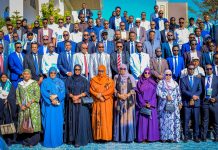
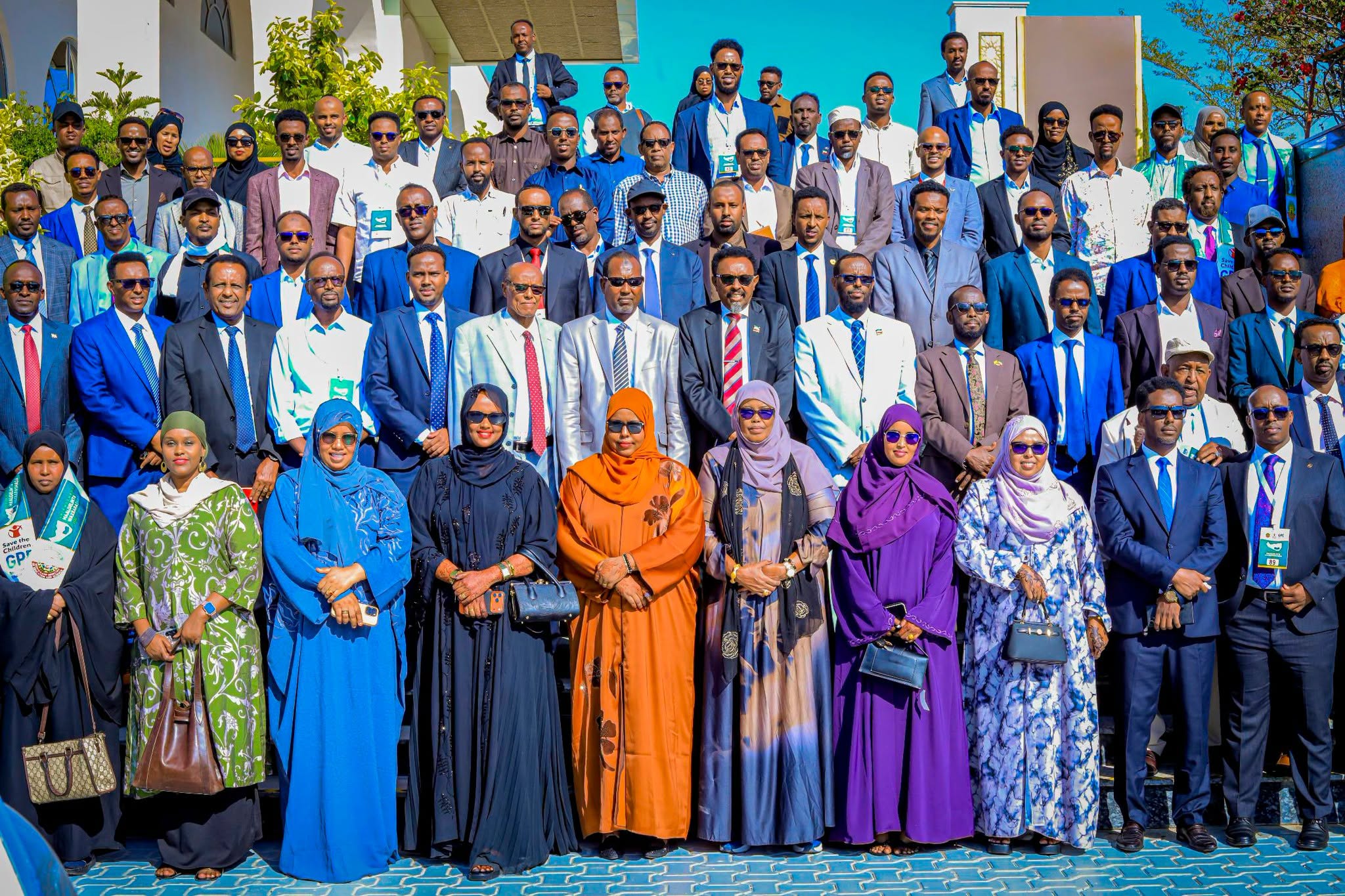
Convened on 26–27 October under the theme “Closing the Education Financing Gap for Equitable, Resilient, and Quality Learning Outcomes for All Children”, the conference brought together national leaders, legislators, local authorities, development partners, businesses, universities and civil society.
Vice-President Mohamed Aw Ali Ahmed officially inaugurated the proceedings. The Minister of Education and Science, Professor Ismail Duale Yussuf, hosted the gathering, joined by cabinet colleagues and senior government officials. Parliamentary representation included the Acting Speaker of the House of Representatives, Saeed Mire Farah ‘Giirre’, alongside members of both legislative chambers.
The breadth of participation matters because the communiqué describes a problem that extends well beyond the education ministry’s capacity to solve alone.
Alongside its estimate of children out of school, it reports a 46.9 per cent expenditure shortfall at the close of the 2022–2026 Education Sector Strategic Plan. These are the conference’s reported figures; together, they frame a substantial gap between educational need and available resources.
The consequences are concrete: textbook and learning-material shortages, inadequate incentives to retain teachers, deteriorating buildings, and insufficient water, sanitation, and hygiene facilities.
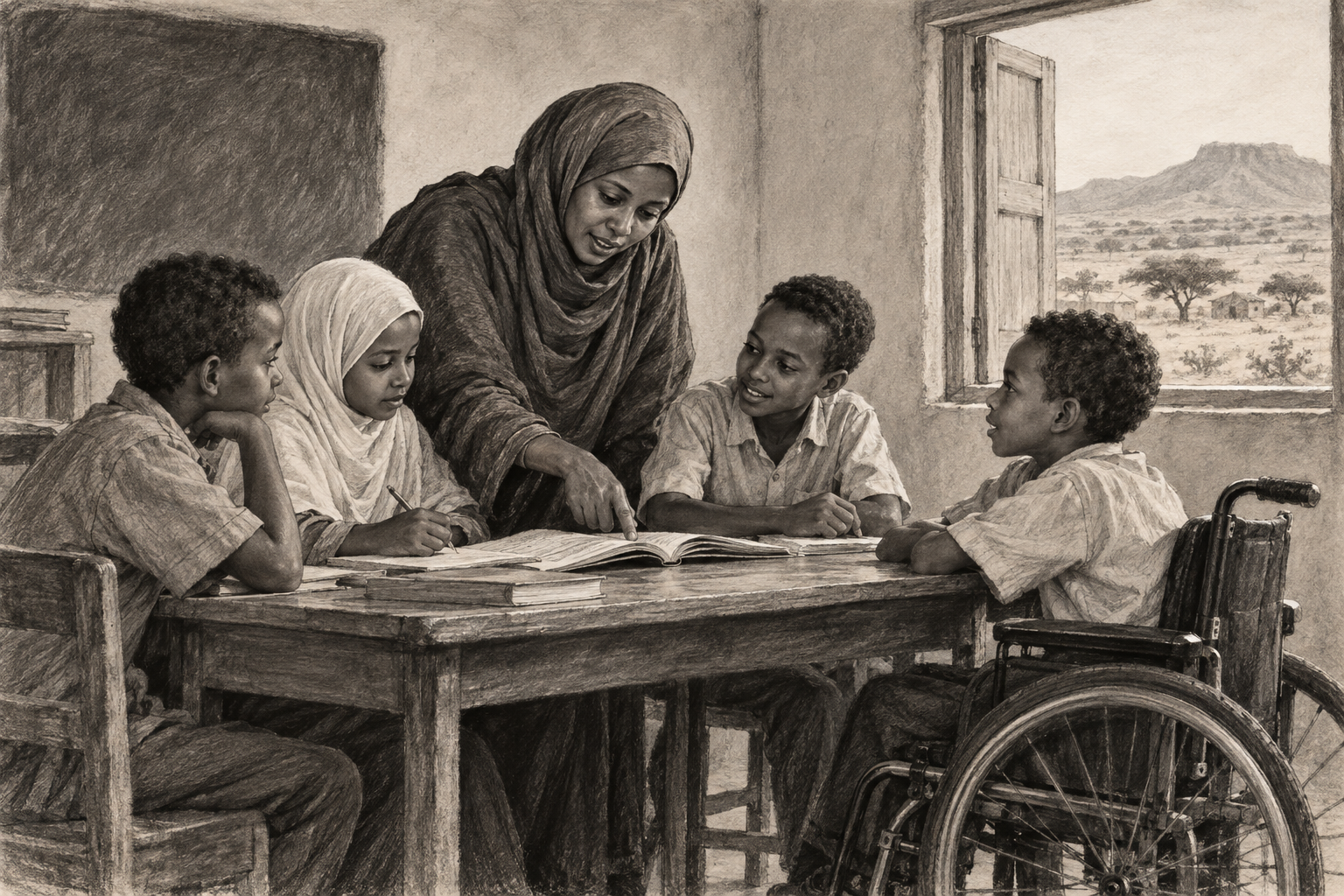
In rural and hard-to-reach communities, barriers include too few schools, qualified teachers, and essential services. Children with disabilities and other vulnerable learners receive insufficient support.
“These gaps demand an immediate, sustained national response,” the communiqué says, “with financing directed towards the children and communities facing the greatest barriers to education.”
That qualification is central. The conference is not merely asking for a larger education budget. It is calling for spending decisions that confront unequal access to learning.
The next budget, the first test
The communiqué seeks to connect education policy more firmly to the machinery of government finance.
It says coordination between the Ministry of Education and Science and the Ministry of Finance and Development must be institutionalised so education priorities are embedded in budget preparation, macroeconomic planning, and expenditure reviews.
It also calls on the president to champion increased education financing, with successive annual budgets supported by “a clear, phased implementation framework and predictable releases”.
The emphasis on releases is important. An allocation on paper does not, by itself, put textbooks in classrooms or help schools retain teachers.
“Budget commitments must translate into predictable releases and accountable spending,” the document states, prioritising “access, teaching quality, inclusion and skills development”.
One detail requires clarification as implementation begins. The call for a “2%” increase in 2027 does not specify whether this means a relative increase in the ministry’s allocation or a two-percentage-point increase in its share of the national budget. The budget process will need to resolve the distinction.
But the direction is explicit: phased increases must start now, rather than remain a distant aspiration.
A trust fund
A proposed Education Trust Fund would broaden the sector’s sources of support.
The conference envisages private and philanthropic contributions, government top-ups and international support, alongside Zakat and Waqf arrangements subject to their respective eligibility and governance requirements.
 Crucially, the communiqué sets a boundary around the proposal: “The Fund must supplement public education financing, protect restricted contributions and direct resources towards agreed education priorities.”
In other words, the communiqué does not present raising money from businesses, communities, and charitable sources as an alternative to increasing the state’s contribution.
Nor does the communiqué treat fundraising as sufficient without safeguards. It says the fund’s governance must provide “stakeholder representation, independent audit and public reporting”.
Those requirements place accountability at the centre of the proposal. Contributors would need confidence that funds were being used as intended; communities would need to see how allocation decisions were made.
The communiqué itself has not established the fund. Instead, the communiqué calls on the education ministry to lead an immediate consultation involving the finance ministry, parliament, religious scholars, businesses, civil society, the diaspora, and development partners.
That process is intended to agree the fund’s mandate, representation, financing, allocation and oversight, and prepare governing instruments and draft legislation for parliamentary consideration.
Local lessons, national responsibilities
The conference also drew on experience in Somaliland.
It commended Berbera, followed by Hargeisa and Gabiley, for using decentralised arrangements to support school operations, develop education facilities and contribute to teacher remuneration. Other councils are encouraged to adapt those approaches to their own circumstances. 
But the communiqué does not propose making educational opportunity dependent on individual municipalities’ resources.
Local initiatives should reinforce the education ministry’s leadership, national standards and oversight through “coordinated planning, clear responsibilities and transparent reporting”, it says, with particular attention to districts with fewer resources.
That is an important balance: encouraging councils to act while recognising that poorer districts must not be left further behind.
Universities, too, are assigned a role — helping mobilise resources, improve educational quality and relevance, develop a skilled workforce and ensure investment produces measurable results.
A decade of delivery
The Ministry of Education and Science will translate the commitments into a 10-year roadmap, working with education partners, local government, businesses, legislators and civil society.
That provides a long-term horizon. The communiqué’s insistence on action in the next budget provides the immediate test.
The conference has set out the essential elements of a more sustainable financing system: a larger public contribution, additional sources of support, stronger local participation and transparent oversight. None can substitute for the others. A trust fund cannot discharge the government’s responsibility; a budget increase cannot deliver its purpose without reliable releases and accountable spending.
For the children identified in the communiqué — those outside school, those learning without adequate materials and those whose disabilities or location restrict their opportunities — the measure of success will be practical.
It will be whether a school becomes reachable, a teacher stays, a classroom has books and a child previously excluded can learn.
The Hargeisa conference has made its demand clear. The next budget must show the first evidence of an answer.
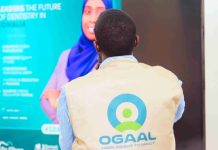
Astaan Cable played a visible role in branding and setting the stage for the conference


