


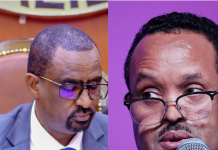








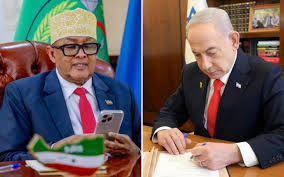
In a move with profound geopolitical implications, the State of Israel has formally recognized the Republic of Somaliland as a sovereign and independent state. This decision, announced on December 26, 2025, by Prime Minister Benjamin Netanyahu and Foreign Minister Gideon Sa’ar, marks not merely a diplomatic gesture but a significant recalibration of alliances in the volatile Horn of Africa and the wider Middle East.
Reopening a Historical Chapter
Israel’s recognition is framed by both nations as a reaffirmation of a historical precedent. As highlighted in Somaliland’s parliamentary statements, Israel was the first country to recognize Somaliland’s initial independence on June 26, 1960, following the end of British protectorate rule. That independence was short-lived, lasting only five days before Somaliland entered a union with the Trust Territory of Somalia (Italian Somaliland) to form the Somali Republic on July 1, 1960—a union Somalilanders describe as ultimately “unratified” and leading to decades of marginalization and conflict.
After declaring its independence from Somalia in 1991 following a brutal civil war, Somaliland has functioned as a de facto state for 34 years, boasting its own government, currency, military, and conducting democratic elections. However, it has awaited de jure international recognition. Israel’s 2025 declaration is therefore portrayed as “reopening a historical chapter,” validating Somaliland’s consistent claim to statehood rooted in its brief but legitimate period of international recognition in 1960.
A New Axis in the Red Sea
The recognition carries immediate and far-reaching strategic consequences:
-
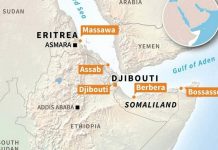
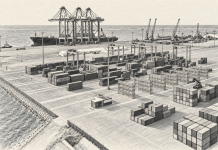
For Israel, establishing full diplomatic relations with Somaliland provides a critical ally in a strategic location. Somaliland’s Berbera Port, situated near the entrance of the Red Sea and the Gulf of Aden, offers potential for logistical and naval cooperation. This aligns with Israel’s interests in securing vital maritime routes and countering threats from hostile actors in the region, including Iranian influence.
-
The “Abraham Accords” Expansion: Somaliland’s Foreign Ministry has explicitly stated its “firm intention to accede to the Abraham Accords.” This would make Somaliland the first predominantly Muslim entity outside the Arab world to join the U.S.-brokered normalization agreements between Israel and Arab states. It signals a potential new paradigm where pragmatic strategic and economic interests transcend traditional ideological blocs.
-
Domino Effect on International Recognition: Reports indicate that South Sudan quickly followed Israel as the second nation to extend official recognition. This sets a potential precedent, shifting the question from if others will recognize to who and when.
-
Challenge to the African Union and Status Quo: The recognition directly challenges the African Union’s long-standing – but erroneously interpreted – principle of respecting colonial borders (uti possidetis), which has underpinned Somalia’s territorial claim over Somaliland. Israel’s move places pressure on other nations to re-evaluate their stance, framing Somaliland as a “success story for Africa” of stable, democratic self-governance in a troubled region.
The Critical U.S. Angle: A Strategic Crossroads
All eyes now turn to Washington. The United States finds itself at a strategic crossroads, with significant forces pulling in both directions.
-
As noted in contemporaneous reports, President Donald Trump was “looking into” the recognition of Somaliland as recently as August 2025. The strategic rationale for the U.S. is compelling. Official recognition would grant America a new strategic foothold in the Horn of Africa through a potential air and sea base near the Berbera Port, a location of immense importance for monitoring the Bab el-Mandeb strait and projecting power. This aligns with ongoing, escalated U.S. counterterrorism efforts in the region, as seen in recent airstrikes against ISIS and Al Qaeda affiliates in Somalia. Recognition would also cement a powerful pro-U.S., pro-Israel ally in the region and be framed as a victory for the Trump administration’s foreign policy doctrine of pragmatic deal-making and challenging legacy structures.
-
The Institutional Hesitation: However, the U.S. foreign policy establishment has long been hesitant to recognize Somaliland, fearing it would:
-
Undermine the fragile U.S.-backed Federal Government in Mogadishu and potentially trigger wider fragmentation in the region.
-
Breach the U.S.’s generally supportive stance toward the African Union’s position on territorial integrity.
-
Create an unwelcome precedent for other secessionist movements worldwide.
-
The dramatic move by Israel, a close U.S. ally, forces Washington’s hand. A decision not to follow suit could cede strategic ground in the Horn to other powers, while a decision to recognize would represent one of the most significant U.S. foreign policy shifts in Africa in decades.
Potential Benefits for Somaliland
For Hargeisa, this recognition is a watershed moment with tangible prospects:
-
Legitimacy and Investment: Formal statehood is expected to unlock access to international financial institutions, bilateral loans, and foreign direct investment, particularly for infrastructure and development projects like the Berbera corridor.
-
Security Partnerships: Enhanced cooperation with Israel, and potentially the U.S., could strengthen Somaliland’s security capabilities.
-
Diplomatic Momentum: Breaking the international recognition barrier with a strategically significant player like Israel provides immense momentum to its global diplomatic campaign, squarely placing the U.S. decision on the agenda.
The Djibouti Folly
The strategic alignment of Djibouti with distant powers like Turkey, Egypt, and the embattled government in Somalia, at the expense of its natural kin in Somaliland, represents a profound geopolitical folly rooted in short-term political calculus rather than enduring national interest. Despite sharing a border, a common ethnic and cultural heritage with the Isaaq and Dir clans of Somaliland, and intertwined pastoral economies, Djibouti’s government has chosen to isolate Hargeisa, largely motivated by a fear of economic competition and envy of Somaliland’s fast-developing Berbera Port. This posture ignores the reality that a stable, recognized, and prosperous Somaliland would enhance regional security and economic integration, from which Djibouti itself would benefit. Instead, by anchoring itself to the unstable project of Somali unity and to extra-regional patrons, Djibouti risks isolating itself within its own neighborhood, creating unnecessary friction with a contiguous, stable entity, and potentially missing out on the synergistic opportunities of a collaborative Horn of Africa—all while Berbera, backed by new strategic recognition and investment, continues its ascent as a direct competitor to Djibouti’s port monopoly.
The “Hypocritical Rejection” and Regional Tensions
The move has been met with predictable and fierce condemnation from the Federal Government of Somalia in Mogadishu, which declared it a “violation of its sovereignty and unity.” More broadly, it has sparked what Somaliland’s parliament termed an “obtuse, hypocritical rejection” from many Islamic and Arab states.
This rejection is seen as hypocritical from Somaliland’s perspective for several reasons:
-
Selective Application of Self-Determination: Many nations that champion the right of self-determination for other peoples (notably the Palestinians) refuse to acknowledge the same right for the people of Somaliland, who have maintained a separate, functional state for over three decades.
-
Prioritizing Political Unity Over Reality: Critics argue that the Arab and Islamic world’s solidarity with Somalia often ignores the political reality on the ground and the documented historical context of Somaliland’s separate independence and subsequent failed union.
-
Geopolitical Alignment Over Principle: The rejection is viewed as stemming less from a principled adherence to international law and more from regional politics, alliances with Mogadishu, and a reluctance to disrupt the Arab consensus.
A Geopolitical Catalyst
Israel’s recognition of Somaliland is a geopolitical catalyst. It has instantly reshaped the diplomatic landscape, creating a direct link between Middle Eastern politics and Horn of Africa sovereignty. The initial “dominoes” of Israel and South Sudan have fallen. The world now watches to see if the United States—the ultimate domino—will fall as well.
The decision in Washington will determine whether this development remains a significant bilateral shift or becomes the foundation of a wholly new strategic map, realigning alliances, redefining norms, and creating a new, U.S.-anchored partnership in one of the world’s most consequential maritime and security theaters.


